
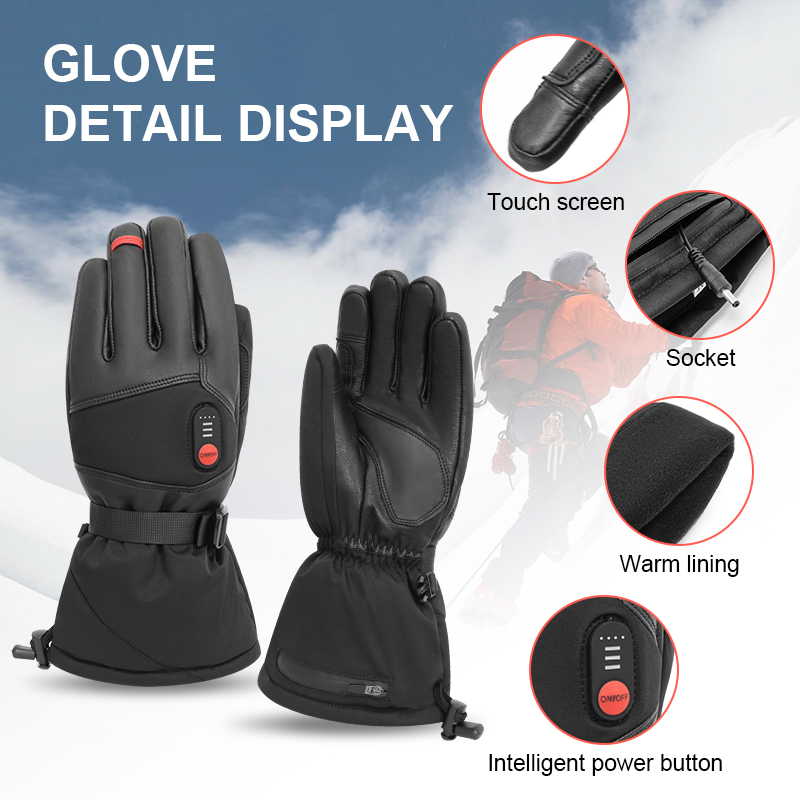
Heated gloves might seem like magic the first time you try them. One moment your hands are freezing; the next, a gentle warmth spreads across your fingers, keeping you comfortable even in subzero temperatures. But how exactly do these high-tech accessories generate heat? What makes them safe to wear? And how long can you expect the batteries to last?
In this article, we’ll dive deep into the technology behind heated gloves. By understanding how they work, you’ll be better equipped to choose a quality pair, troubleshoot issues, and maximize their lifespan.
The Anatomy of Heated Gloves
At first glance, heated gloves look similar to premium winter gloves. They have an outer shell, insulation layer, lining, and all the usual features like wrist cinches and adjustable cuffs. However, hidden within the fabric are three additional components that make active heating possible:
1. Heating Elements – Thin, flexible wires or carbon fiber panels woven into the fabric.
2. Rechargeable Batteries – Compact lithium-ion power packs that supply electricity.
3. Control Circuitry – A small circuit board that regulates temperature and protects against electrical faults.
These three systems work together to transform electrical energy into comfortable, controlled warmth. Let’s examine each component in detail.
How Heating Elements Function
The heating element is the heart of any heated glove. There are two primary technologies used in modern heated gloves: metal wire heating and carbon fiber heating.
Metal Wire Heating Elements
Traditional heated gloves use thin stainless steel or nickel-chromium alloy wires stitched into the glove lining. When electrical current passes through these wires, resistance causes them to heat up—this is the same principle used in electric blankets and toasters. The wires are insulated and sealed within protective coatings to prevent short circuits and ensure user safety.
The advantage of metal wire systems is their rapid heat-up time. They can reach operating temperature in under a minute. However, they can be slightly less flexible than carbon fiber alternatives and may create hot spots if the wire spacing is uneven.
Carbon Fiber Heating Elements
Carbon fiber heating elements represent the newer generation of heated glove technology. Instead of wires, manufacturers use thin sheets or strips of carbon fiber fabric. Carbon fiber has excellent electrical resistance properties, meaning it heats evenly across its entire surface when current is applied.
Carbon fiber panels are more flexible, lighter, and distribute heat more uniformly than wire-based systems. They also tend to be more durable because there are no individual wires that could break from repeated bending. Many premium manufacturers, including industry leaders like
NRHEAT, have adopted carbon fiber technology for their heated gloves and heated apparel lines. NRHEAT’s proprietary heating system is designed for energy efficiency and customizable heat distribution, allowing OEM clients to specify exactly where heat should be concentrated based on end-user needs.
Heat Distribution Zones
Quality heated gloves don’t just heat the back of your hand—they strategically distribute warmth to the areas that need it most. The most common heating zones include:
• Back of the hand – The primary heating zone in virtually all heated gloves.
• Fingers and fingertips – Essential for maintaining dexterity; found in premium models.
• Thumb – Often overlooked but critical for grip and comfort.
• Palm – Less common but useful for specific activities like motorcycling.
The more heating zones a glove has, the more expensive it typically is—but also the more effective it is at keeping your entire hand warm.
Battery Technology & Power Management
Heated gloves are only as good as their power source. Understanding battery technology helps you set realistic expectations for runtime and performance.
Lithium-Ion Battery Packs
Virtually all modern heated gloves use 7.4V lithium-ion battery packs. These batteries are chosen for their high energy density, light weight, and rechargeability. A typical battery pack for heated gloves weighs just 3–5 ounces and slides into a dedicated pocket on the glove’s cuff or wrist.
Battery capacity directly impacts runtime. Entry-level gloves often come with 2,200mAh batteries, while premium models may include 3,000mAh or even 5,000mAh options. To put this in perspective:
• Low heat setting (95–105°F): 6–8 hours with a 3,000mAh battery
• Medium heat setting (110–125°F): 4–5 hours with a 3,000mAh battery
• High heat setting (130–150°F): 2–3 hours with a 3,000mAh battery
Voltage and Wattage
Most heated gloves operate at 7.4 volts, though some budget models use 3.7V or 5V systems. Higher voltage generally means faster heating and the ability to reach higher temperatures. The total power output is measured in watts, with most heated gloves drawing between 5W and 15W depending on the heat setting.
Temperature Control Systems
Modern heated gloves feature sophisticated temperature control systems that allow users to adjust warmth on the fly.
Manual Controls
The most common control method is a small button on the back of the glove or cuff. Pressing the button cycles through heat settings—usually low, medium, and high. An LED indicator shows the current setting (often blue for low, white for medium, red for high). This simple system is reliable and easy to use even while wearing the glove.
Smart Controls and Bluetooth
Some advanced heated gloves now offer Bluetooth connectivity, allowing you to control temperature via a smartphone app. This is particularly useful for motorcyclists and skiers who want to adjust heat without stopping. A few high-end models even include accelerometers that automatically adjust heat output based on activity level or ambient temperature.
Safety Features & Certifications
Safety is a natural concern when combining electricity, heat, and water exposure. Fortunately, reputable heated glove manufacturers implement multiple safety mechanisms:
Built-In Safety Mechanisms
• Overheat protection – Circuits automatically shut off if temperature exceeds safe limits.
• Short-circuit protection – Prevents electrical faults from causing damage or injury.
• Waterproof battery housings – Sealed compartments keep batteries dry even in wet conditions.
• Auto shut-off – Some gloves turn off automatically after a set period to prevent overheating.
International Safety Certifications
Always look for certified products. Key certifications include CE (European conformity), FCC (US electromagnetic compliance), RoHS (restriction of hazardous substances), and UL (Underwriters Laboratories safety testing). For the Japanese market, PSE and METI certifications are required.
Manufacturers like NRHEAT invest heavily in safety testing. Their in-house laboratory and aging test room ensure that every batch of heated gloves meets rigorous durability, safety, and performance standards before shipping to clients worldwide. With certifications spanning CE, FCC, RoHS, UL, PSE, METI, and ISO9001, they demonstrate a commitment to product safety that smaller manufacturers may not match.
Battery Life & Runtime: Real-World Expectations
One of the most common questions about heated gloves is: how long do they actually last? The honest answer is—it depends.
Battery life varies based on heat setting, ambient temperature, battery age, and glove design. A brand-new battery on low heat in mild cold (20–30°F) might deliver 8 hours of warmth. The same battery on high heat in extreme cold (below 0°F) might only last 2 hours.
To maximize battery life:
• Start on high heat for 10–15 minutes to warm up, then drop to medium or low.
• Pre-warm your hands before putting on the gloves—cold hands drain batteries faster.
• Carry spare batteries if you need all-day warmth.
• Store batteries at room temperature and charge them every 2–3 months during off-season.
Care & Maintenance Tips
Proper care extends both glove lifespan and battery performance. Always remove batteries before cleaning. Hand wash with mild detergent or use a damp cloth for spot cleaning. Never wring out heated gloves—gently squeeze excess water and air dry flat. Avoid exposing batteries to extreme heat or direct sunlight, and never attempt to disassemble battery packs.
Conclusion
Heated gloves work by passing electrical current through flexible heating elements—either metal wires or carbon fiber panels—powered by rechargeable lithium-ion batteries. Modern temperature controls, safety circuits, and waterproofing make them safe and reliable for everyday use.
When shopping for heated gloves, prioritize models with certified safety standards, even heat distribution, and sufficient battery capacity for your needs. Understanding the technology empowers you to make an informed purchase and get the most out of your investment. For businesses seeking to develop or expand their heated glove product line, partnering with an experienced manufacturer ensures access to proven technology, comprehensive safety certifications, and scalable production capabilities.
Best Heated Wetsuits for Divers & Surfers (2026 Guide)
Cold-water surfers a


