
Why Hunters Need Heated Gloves
Hunting demands patience, stillness, and precision — three things that become impossible when your hands are freezing. Unlike skiers or motorcyclists who generate body heat through movement, hunters often sit motionless for hours in blinds, tree stands, or ground positions during the coldest hours of dawn and dusk. In these conditions, even premium insulated gloves eventually lose the battle against cold.
Heated gloves for hunting are specifically engineered to solve this problem. By generating active warmth through battery-powered heating elements, they maintain comfortable hand temperatures regardless of how long you sit still or how far the mercury drops. But hunting heated gloves must do more than just keep hands warm — they need to preserve the stealth, dexterity, and durability that hunting demands.
This guide covers everything hunters need to know about choosing heated gloves, from camouflage patterns and scent control to battery runtime in extreme cold and the dexterity required for a clean trigger pull.
The Unique Demands of Hunting Gloves
Hunting places requirements on gloves that no other activity does. Understanding these demands helps you choose heated gloves that won’t let you down when it matters most.
Extended Stillness in Extreme Cold
The average hunter sits motionless for 2–6 hours per outing, often in temperatures between 10°F and 30°F (-12°C to -1°C). Without active movement, blood circulation to extremities slows dramatically. Even heavily insulated gloves can’t compensate for reduced blood flow — your hands simply stop generating enough body heat for insulation to trap.
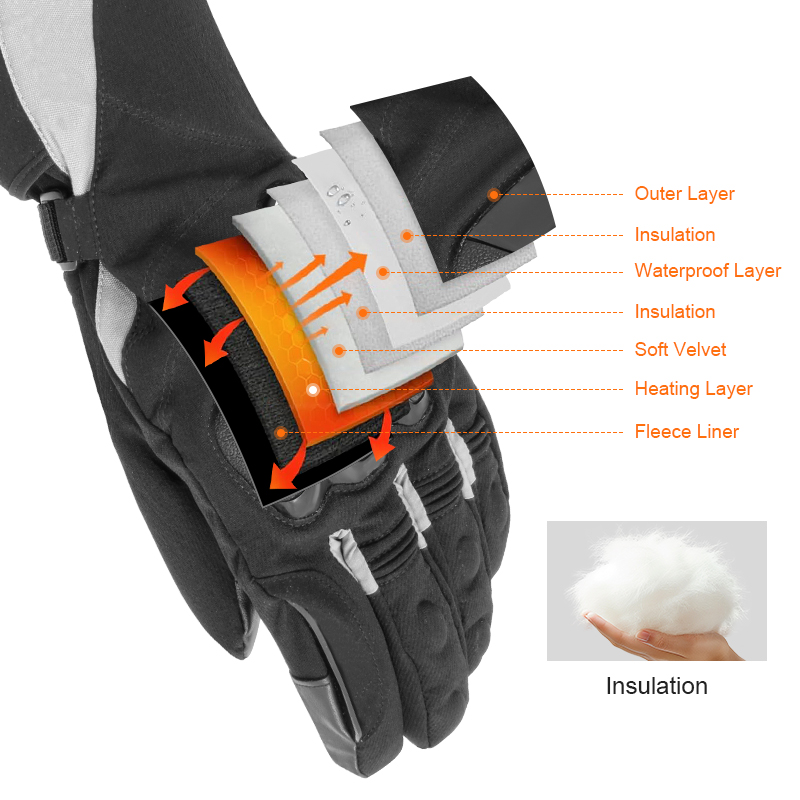
Heated gloves solve this by providing an external heat source. Instead of relying on your body’s diminishing warmth, carbon fiber or metal wire heating elements maintain a consistent 95–130°F (35–54°C) across your hands for hours on end.
Trigger and Bow Dexterity
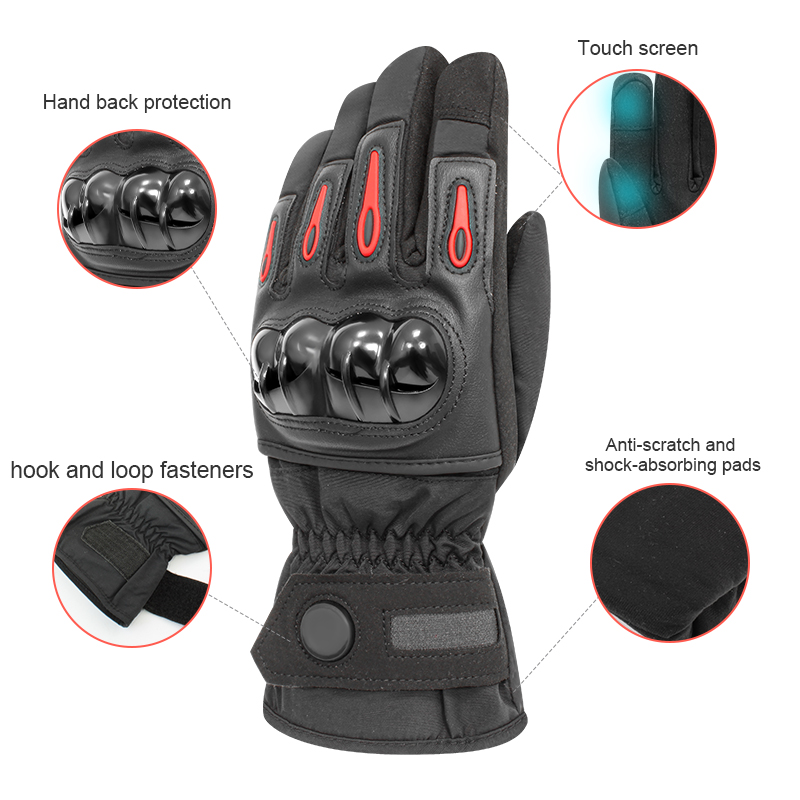
A hunting glove must allow precise finger movement for trigger operation, bow release, or equipment adjustment. Bulky heated gloves that work fine for skiing can be useless for hunting if you can’t feel the trigger. Quality heated hunting gloves are designed with:
- Pre-curved fingers that match the natural grip position
- Thinner palm and finger materials to preserve tactile sensitivity
- Reinforced but not overly thick fingertips for trigger feel
- Ambidextrous design or shooter-specific finger construction
Stealth and Silence
Hunting requires near-total silence. Rustling fabric, clicking buttons, or creaking materials can spook game from 100 yards away. Heated hunting gloves must be engineered for stealth:
- Noise-dampened fabrics — materials that produce minimal friction sound (under 25 decibels in lab testing)
- Silent control buttons — heat adjustment buttons that don’t click audibly
- Soft-touch outer shells that brush past branches and vegetation quietly
Premium hunting gloves from manufacturers like NRheat incorporate noise-dampened fabric technology that produces less than 25dB of friction sound — quiet enough for close-range hunting situations.
Key Features of Heated Hunting Gloves
1. Camouflage Patterns
Hunting heated gloves need to blend into your environment. Quality manufacturers offer licensed camouflage patterns including:
- Realtree Edge® — versatile pattern for mixed woodland and field edges
- Mossy Oak Break-Up® — ideal for flooded timber and bottomland hunting
- Snow camo — for late-season hunting in snowy conditions
- Solid earth tones — for open terrain and western hunting
NRheat offers heated hunting gloves with licensed Realtree Edge® and Mossy Oak Break-Up® patterns, with sublimation printing available for custom camo designs through their OEM program.
2. Scent Control Technology
Deer and elk have olfactory senses far more powerful than humans. Scent elimination is a critical feature for hunting gloves. Advanced heated hunting gloves incorporate:
- Antimicrobial treatments (such as ScentLock®) that eliminate up to 99.9% of odor-causing bacteria
- Carbon-impregnated fabrics that absorb and trap human scent
- Moisture-wicking liners that reduce the bacterial growth that causes odor
3. Heating Zone Configuration
For hunting, heat distribution needs to prioritize the fingers — particularly the trigger finger and the thumb. Look for gloves with:
- Full-finger heating extending to the fingertips
- Independent trigger finger heating (premium feature)
- Back-of-hand heating as a secondary zone
- Palm heating (less critical for hunting but useful for overall comfort)
NRheat’s heated hunting gloves use patented carbon fiber heating elements that reach 45°C (113°F) in approximately 30 seconds and maintain consistent heat for up to 6 hours even at -20°C (-4°F).
4. Battery Performance in Extreme Cold
Hunting often happens during the coldest parts of the day — pre-dawn and dusk — in late season when temperatures are at their lowest. Battery performance in these conditions is critical:
| Battery Capacity | Heat Setting | Runtime at 0°F (-18°C) | Runtime at 20°F (-7°C) |
| 2,200mAh | High | 1.5–2 hours | 2.5–3 hours |
| 2,200mAh | Medium | 3–4 hours | 4–5 hours |
| 3,000mAh | High | 2–2.5 hours | 3–3.5 hours |
| 3,000mAh | Medium | 4–5 hours | 5–6 hours |
| 3,000mAh | Low | 6–7 hours | 7–8 hours |
Cold-weather battery tip: Keep spare batteries in an inside jacket pocket close to your body warmth. A battery at body temperature will deliver 20–30% more runtime than one stored in an outer pocket.
5. Durability and Weather Resistance
Hunting gloves face briars, branches, rocks, and wet conditions. Your heated gloves need:
- Kevlar-reinforced fingertips and palms for abrasion resistance
- Waterproof construction (IPX6 or higher) for rain and snow
- High-denier outer shells that resist punctures and tearing
- Reinforced stitching at stress points
NRheat’s hunting gloves are built to military specifications including MIL-STD-810H vibration resistance and 50,000+ bend cycle circuits — meaning the heating elements survive repeated flexing without breaking.
6. Touchscreen Compatibility
Modern hunters use phones for mapping, trail cameras, weather radar, and communication. Touchscreen-compatible fingertips let you operate your device without removing gloves — critical for both convenience and warmth retention.
Types of Heated Hunting Gloves
Different hunting scenarios call for different glove designs:
Late-Season Big Game Gloves
Designed for deer, elk, and moose hunting in November–January conditions. Features: heavy insulation, full camouflage, scent control, extended cuffs, and maximum battery capacity. These are the warmest and most durable heated hunting gloves.
Waterfowl Hunting Gloves
Built for flooded timber, blind hunting, and early morning marsh conditions. Features: fully waterproof construction, longer gauntlet cuffs, thinner palms for calling and shotgun operation, and camouflage patterns suited to wetland environments.
Predator Hunting Gloves
Lighter and more dexterous for calling and shooting at varying distances. Features: thinner insulation for better finger feel, quieter fabrics, and heating focused on fingers rather than full-hand coverage.
Bowhunting Gloves
Engineered for archery hunters who need maximum finger sensitivity and release aid compatibility. Features: ultra-thin palm material, fingerless or convertible designs, and heating concentrated on the back of the hand to avoid interfering with release mechanics.
Safety and Certifications
Hunting combines firearms, cold weather, and electrical components — so safety is paramount. Look for heated hunting gloves with:
- CE and FCC certifications — electrical safety and electromagnetic compliance
- RoHS compliance — no hazardous materials in construction
- Overheat protection — automatic shutoff if temperature exceeds safe limits
- Short-circuit protection — prevents electrical faults from causing injury
- Waterproof battery housings — sealed compartments rated IPX6 or higher
Quality manufacturers maintain in-house testing facilities. NRheat operates an independent development laboratory and aging test room where every production batch of heated hunting gloves undergoes durability cycling, waterproof testing, and electrical safety verification before shipping.
Caring for Heated Hunting Gloves
Hunting gloves take significant abuse. Proper care extends their lifespan:
- Remove batteries immediately after each hunt
- Air dry completely before storage — never store damp gloves
- Spot clean only with a damp cloth and mild detergent
- Reapply scent control treatment periodically if your gloves use washable antimicrobial treatments
- Inspect heating elements before each season for any damage
- Store batteries at 50% charge in a cool, dry place during off-season
- Charge batteries every 2–3 months during storage to maintain battery health
Frequently Asked Questions
Are heated gloves safe to use while handling firearms?
Yes. Quality heated gloves are designed with electrical shielding and safety circuits that prevent any interference with firearm operation. The heating elements are low-voltage (7.4V) and fully insulated within the glove fabric.
Will the battery make noise when I move?
Quality heated hunting gloves use noise-dampened battery housings and fabric construction. NRheat’s hunting gloves produce less than 25dB of friction sound — inaudible at hunting distances.
Can I wash scent control out of heated hunting gloves?
Antimicrobial treatments like ScentLock® are bonded to the fabric and survive multiple wash cycles. However, always follow manufacturer care instructions — most heated hunting gloves should be spot-cleaned only, never machine washed.
How long do heated hunting glove batteries last in extreme cold?
At 0°F (-18°C), expect 2–3 hours on high and 4–6 hours on medium with a 3,000mAh battery. Carrying spare batteries in an inside pocket is recommended for all-day hunts.
Conclusion
For hunters, cold hands aren’t just uncomfortable — they’re a performance liability. Numb fingers mean missed shots, fumbled gear, and shortened hunts. Heated gloves for hunting eliminate these problems by delivering reliable, adjustable warmth that lasts from first light to last light, even in the most brutal late-season conditions.
The right heated hunting gloves combine stealthy camouflage, scent control technology, silent operation, durable construction, and heating performance engineered for extreme cold — all while preserving the finger dexterity needed for a clean, ethical shot.
For outdoor brands and retailers seeking premium heated hunting gloves, NRheat offers 16+ years of OEM and ODM manufacturing expertise. Their heated hunting gloves feature licensed camouflage patterns, ScentLock® antimicrobial treatment, noise-dampened fabric, carbon fiber heating elements, and military-grade durability — all backed by CE, FCC, RoHS, and ISO9001 certifications. With flexible MOQs, custom heating zone design, and full private-label services, they help brands deliver hunting gloves that perform when it matters most.
Stay warm, stay still, and make every shot count.