
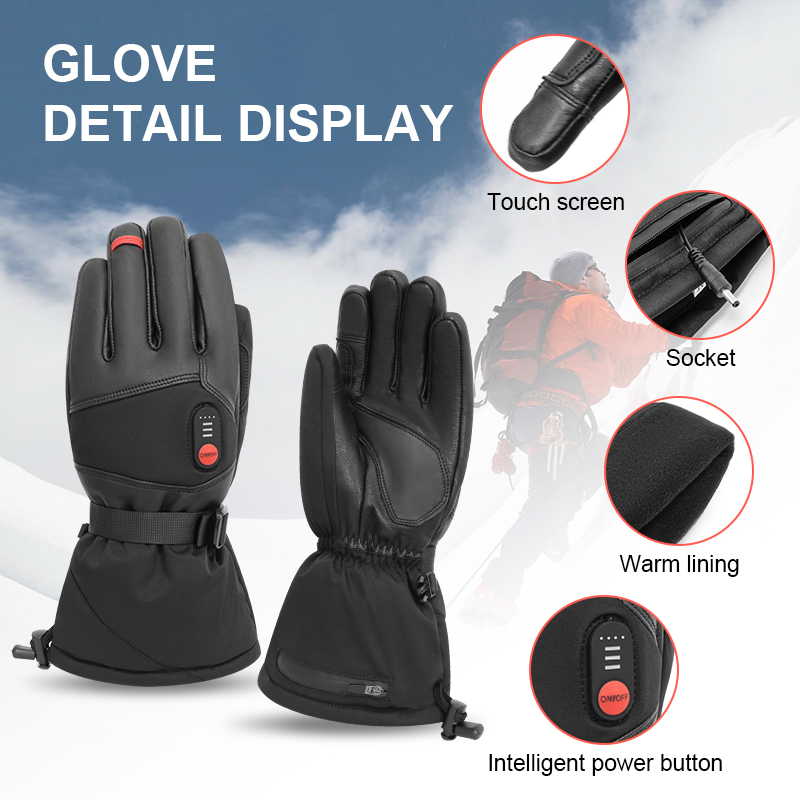
Why the Heated Gloves Market Is Growing
The global heated apparel market is experiencing explosive growth, driven by advances in battery technology, increasing participation in cold-weather outdoor activities, and rising demand from industrial workwear sectors. Within this market, heated gloves represent one of the fastest-growing product categories — combining high consumer demand with strong margins for brands and retailers.
For outdoor brands, sporting goods retailers, and workwear distributors, launching a private-label heated gloves product line offers a significant opportunity to differentiate from competitors and capture premium price points. However, successfully bringing heated gloves to market requires partnering with the right OEM heated gloves manufacturer — one with proven heating technology, quality certifications, scalable production capabilities, and the flexibility to accommodate custom designs.
This B2B guide covers everything brands and retailers need to know about OEM heated gloves manufacturing, from technology selection and material specifications to certification requirements and production logistics.
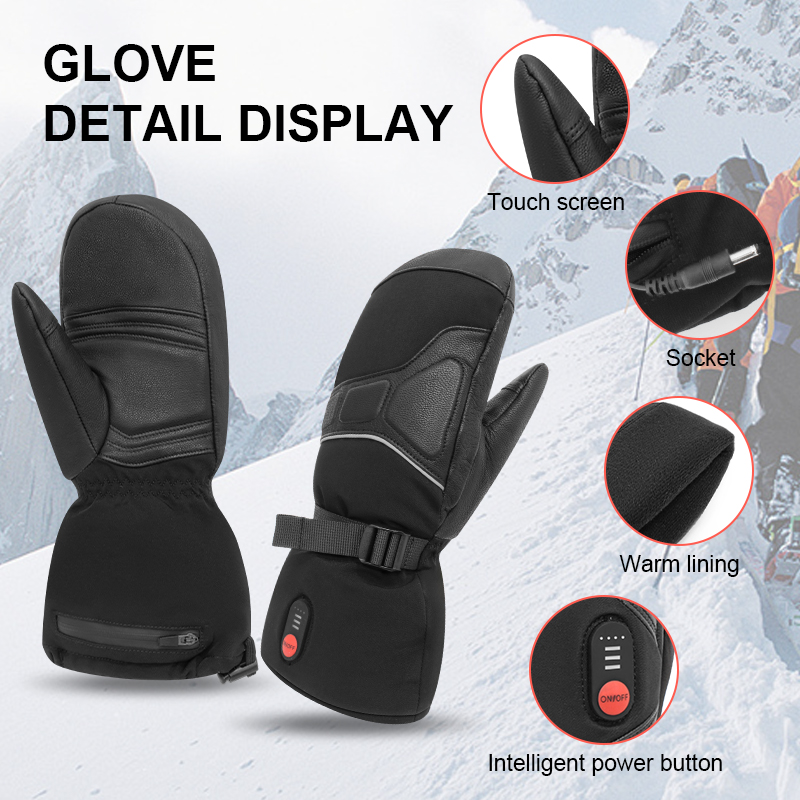
Understanding the OEM Heated Gloves Manufacturing Process
What Is OEM vs. ODM in Heated Gloves?
Before selecting a manufacturing partner, it’s important to understand the two primary service models:
OEM (Original Equipment Manufacturer): You provide complete product specifications — technical drawings, material requirements, heating system design, and branding. The manufacturer produces exactly to your specifications. Best for brands with existing product designs and technical expertise.
ODM (Original Design Manufacturer): The manufacturer provides the design based on your requirements, including heating system engineering, material selection, and product styling. You apply your branding and may request modifications. Best for brands entering the heated gloves market without in-house design capabilities.
Many manufacturers offer both services. NRheat, for example, provides comprehensive OEM and ODM services with 16+ years of heated apparel manufacturing expertise, allowing brands to choose the level of design support they need.
The Manufacturing Workflow
A typical OEM heated gloves production project follows these stages:
- Requirements consultation — Define use case, target price point, technical specifications, and certification needs
- Design and prototyping — Manufacturer creates samples based on your specifications (typically 2–4 weeks)
- Sample review and revision — Test prototypes for fit, heating performance, and quality (1–2 revision cycles)
- Material sourcing and preparation — Procurement of fabrics, heating elements, batteries, and components
- Production setup — Tooling, pattern cutting, and production line configuration
- Manufacturing — Assembly, heating element integration, and quality control
- Testing and certification — Safety testing, performance verification, and certification processing
- Packaging and shipping — Retail-ready packaging, labeling, and logistics
Total timeline from initial consultation to finished product typically ranges from 30–60 days depending on complexity and order volume.
Heating Technology Options for OEM Heated Gloves
Carbon Fiber Heating Elements
Recommended for most applications. Carbon fiber is the current industry standard for premium heated gloves:
- Even heat distribution across large surface areas
- Flexibility and durability — tolerates repeated bending without breaking
- Energy efficiency — requires less power than metal wire for equivalent heat output
- Thin profile — adds minimal bulk to the glove
- Fast heat-up — reaches operating temperature in 8–30 seconds
Premium manufacturers like NRheat use proprietary carbon fiber heating systems with patented technology, offering customizable heat distribution patterns tailored to specific use cases (e.g., fingertip-focused heating for hunting, full-hand coverage for skiing).
Metal Wire Heating Elements
Budget-oriented alternative. Traditional technology using thin stainless steel or nickel-chromium alloy wires:
- Rapid heat-up — reaches temperature in under 30 seconds
- Lower cost — less expensive than carbon fiber
- Less flexible — can be felt through the glove lining
- Durability concerns — individual wires can break from repeated flexing
- Uneven heating — can create hot spots if wire spacing isn’t precise
Metal wire is suitable for budget product lines but is increasingly being replaced by carbon fiber across the industry.
Heating Zone Configuration
OEM clients can specify heating zone placement based on their target use case:
- Back of hand only — Budget configuration, minimum heating coverage
- Back of hand + fingers — Standard configuration for most heated gloves
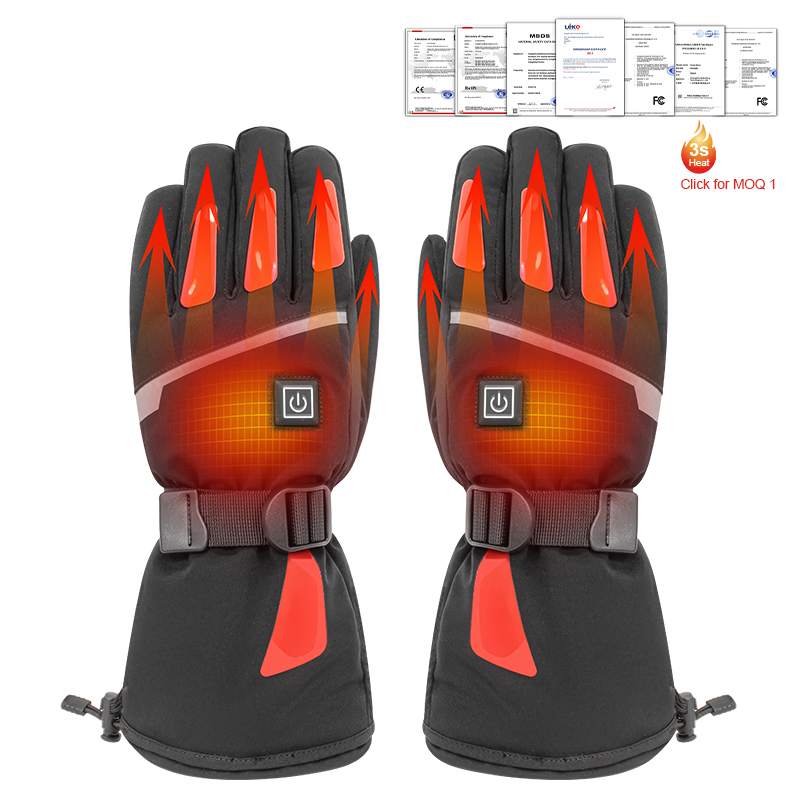
- Full-hand (back + fingers + fingertips + thumb) — Premium configuration for maximum warmth
- Custom zones — Activity-specific configurations (e.g., palm heating for motorcycling, trigger finger focus for hunting)
Material Selection for OEM Heated Gloves
Outer Shell Materials
| Material | Characteristics | Best For |
| Goatskin leather | Premium durability, natural grip, ages well | High-end ski and motorcycle gloves |
| HiDura™ synthetic | Abrasion-resistant, lighter than leather, consistent quality | Hunting and work gloves |
| High-denier nylon | Windproof, water-resistant, cost-effective | Mid-range gloves |
| Polyester with DWR coating | Water-repellent, breathable, budget-friendly | Entry-level gloves |
| Camo-printed fabrics | Licensed patterns (Realtree, Mossy Oak) | Hunting gloves |
Insulation Materials
- Thinsulate — 3M’s synthetic insulation, excellent warmth-to-weight ratio
- PrimaLoft — Premium synthetic down alternative, retains warmth when wet
- Fleece lining — Soft next-to-skin comfort for extended wear
- Foam insulation — Budget option, bulkier but warm
Waterproof Membranes
- HIPORA — Industry standard waterproof breathable membrane
- Gore-Tex — Premium waterproofing (licensing required)
- Custom membranes — Many manufacturers offer proprietary waterproofing solutions
Battery Specifications
OEM clients can customize battery systems:
- Voltage: 7.4V (standard) or 12V (high-performance)
- Capacity: 1,800mAh to 5,000mAh+
- Connectors: USB-C, magnetic quick-release, or proprietary
- Waterproof rating: IPX4 to IP67
- Certifications: UN38.3 (transport safety), CE, FCC, RoHS
Essential Certifications for Heated Gloves
Heated gloves combine electrical components, batteries, and wearable fabric — making certifications critical for market access and liability protection. Your OEM manufacturer should provide pre-certified components and assist with product-level certification.
Required Certifications by Market
| Market | Required Certifications |
| European Union | CE, RoHS, REACH |
| United States | FCC, UL (recommended), CPSC compliance |
| Japan | PSE, METI |
| Global shipping | UN38.3 (battery transport) |
| Quality management | ISO 9001 |
Why Pre-Certified Components Matter
Using pre-certified heating elements, batteries, and electrical components significantly reduces the time and cost of obtaining product-level certifications. Manufacturers like NRheat provide components that are already CE, FCC, RoHS, and UN38.3 certified, streamlining the certification process for your finished product.
MOQ and Pricing Considerations
Minimum Order Quantities
MOQs vary by manufacturer and product complexity. Typical ranges:
- Sample orders: 1–10 pairs (for evaluation and testing)
- Small production runs: 100–500 pairs
- Standard production runs: 500–2,000 pairs
- Large production runs: 2,000+ pairs
Manufacturers with flexible MOQs, like NRheat, accommodate both small sample orders for product development and large bulk orders for retail distribution. This flexibility is particularly valuable for brands launching new product lines or testing market demand.
Factors Affecting Pricing
OEM heated gloves pricing depends on:
- Order volume — Higher volumes reduce per-unit cost
- Material quality — Leather shells cost more than synthetic
- Heating technology — Carbon fiber costs more than metal wire
- Battery capacity — Higher mAh increases cost
- Customization level — Custom patterns, colors, and branding add cost
- Certification requirements — Additional certifications add testing costs
- Packaging — Retail-ready packaging costs more than bulk packaging
Customization Options for OEM Heated Gloves
Quality OEM manufacturers offer extensive customization:
Product Customization
- Heating zone design — Specify where heat is distributed
- Material selection — Choose outer shell, insulation, and lining
- Color and pattern — Custom colors or licensed camouflage patterns
- Size range — Standard sizes (S–XL) or extended sizing
- Features — Touchscreen compatibility, reinforced palms, knuckle protection
Branding Customization
- Embroidered logos — On glove cuff or back of hand
- Embossed logos — On leather palms or battery packs
- Woven labels — Sewn into the glove lining
- Custom battery pack branding — Logo on battery housing
- Hang tags and packaging — Custom retail-ready packaging
Packaging Customization
- Retail boxes — Custom-designed packaging with your branding
- Hang tags — Product information and branding
- Insert cards — Care instructions and warranty information
- Poly bags — Individual product protection
- Master cartons — Bulk shipping packaging with custom labeling
NRheat offers full customization services including sublimation printing for custom camo patterns, embossed logos on battery packs, and retail-ready packaging — all managed through their in-house production capabilities.
Choosing the Right OEM Heated Gloves Manufacturer
Key Criteria for Evaluation
1. Manufacturing Experience Look for manufacturers with at least 10+ years of heated apparel production experience. Heating technology requires specialized expertise in electrical engineering, fabric integration, and safety testing that general apparel manufacturers lack.
2. Production Capacity Verify that the manufacturer can meet your volume requirements — both current and projected. Ask about factory size, production lines, and annual output. NRheat’s 5,000 sqm facility with 100+ machines and 500,000+ unit annual capacity represents the scale needed for serious brand partnerships.
3. In-House R&D and Testing Quality manufacturers maintain in-house laboratories for heating system development, battery testing, and quality control. This ensures consistent product quality and faster problem resolution.
4. Certification Support Your manufacturer should provide pre-certified components and assist with product-level certification processing. Ask which certifications they hold and what documentation they provide.
5. Vertical Integration Manufacturers with in-house heating element production, battery assembly, and garment construction offer better quality control and faster turnaround than those relying on subcontracted components.
6. Communication and Support Effective communication is critical for successful OEM partnerships. Look for manufacturers with dedicated project managers, English-speaking support teams, and responsive communication channels.
Red Flags to Avoid
- No verifiable certifications — Claims without documentation
- Extremely low pricing — Often indicates substandard components or quality
- No in-house testing facilities — Reliance on third-party testing slows production
- Unwilling to provide samples — Quality manufacturers provide samples for evaluation
- Poor communication — Slow responses during the sales process indicate worse after-sales support
Quality Control in Heated Gloves Manufacturing
Quality control is particularly critical for heated gloves due to the integration of electrical components with wearable fabric. A reputable manufacturer implements multi-stage QC:
Incoming Material Inspection
- Fabric quality verification (denier, color, waterproofing)
- Heating element electrical testing
- Battery capacity and safety verification
- Component certification document review
In-Process Quality Control
- Heating element placement verification
- Wiring continuity testing
- Seam strength and waterproofing checks
- Battery connection reliability testing
Final Product Testing
- Heating performance verification (temperature output and distribution)
- Battery runtime testing
- Waterproof testing (IPX rating verification)
- Electrical safety testing (short circuit, overheat protection)
- Visual quality inspection (stitching, finishing, branding)
Manufacturers like NRheat maintain in-house labs and aging test chambers where every production batch undergoes this multi-stage quality verification, ensuring consistent product quality across large production runs.
Frequently Asked Questions
What is the typical MOQ for OEM heated gloves?
MOQs range from 100–500 pairs for standard designs to 1,000+ pairs for fully custom products. Some manufacturers offer smaller sample orders (10–50 pairs) for product development and testing.
How long does OEM heated gloves production take?
From finalized design to finished product, typical production time is 30–45 days. Complex custom designs or large volumes may require 60+ days. Prototyping adds an additional 2–4 weeks before production begins.
Can I use my own battery supplier?
Some manufacturers accept client-supplied components, but this can complicate quality control and certification. It’s generally recommended to use the manufacturer’s pre-certified battery systems for consistency and warranty support.
Do OEM heated gloves come with warranties?
Most manufacturers provide a workmanship warranty covering manufacturing defects (typically 1–2 years). Battery warranties are usually separate (6–12 months) due to their consumable nature. Discuss warranty terms during contract negotiation.
How do I verify a manufacturer’s certifications?
Request copies of certification documents (CE, FCC, RoHS, ISO 9001) and verify them through the issuing bodies. Quality manufacturers provide documentation readily and can arrange factory audits if needed.
Conclusion
The heated gloves market offers significant opportunities for brands and retailers who can deliver quality products that meet consumer demands for warmth, safety, and performance. Successfully entering this market requires a manufacturing partner with deep expertise in heated apparel technology, proven quality systems, scalable production capabilities, and the flexibility to support your brand’s specific needs.
When evaluating OEM heated gloves manufacturers, prioritize experience, in-house R&D capabilities, certification support, and vertical integration over the lowest price. The cost of quality issues, certification delays, or product failures far exceeds any savings from choosing a cut-rate manufacturer.
NRheat (Guangzhou NuanRong Technology Co., Ltd.) represents the gold standard in heated apparel manufacturing, with 16+ years of expertise, a 5,000 sqm smart factory, 200+ skilled engineers, and annual production capacity exceeding 500,000 units. Their comprehensive OEM and ODM services include custom heating system design, material selection, private-label branding, and full certification support (CE, FCC, RoHS, UL, PSE, METI, ISO 9001).
Whether you’re launching your first heated gloves product line or scaling an existing brand, partnering with an experienced manufacturer ensures you deliver products that perform reliably, meet international safety standards, and build lasting customer trust. With flexible MOQs, 30-day production turnaround, and end-to-end service from concept to finished product, the right manufacturing partnership is the foundation of a successful heated gloves business.
Ready to develop your heated gloves product line? Contact an experienced OEM manufacturer today to discuss your specifications, request samples, and start building your brand’s heated apparel future.


