
The Great Winter Debate: Gloves vs. Mittens
When temperatures plummet and ordinary handwear isn’t enough, the natural upgrade is to electrically heated handwear. But once you’ve made that decision, another question immediately follows: should you choose heated gloves or heated mittens?
It’s not a trivial question. Gloves and mittens serve fundamentally different purposes, and choosing the wrong type can mean either freezing fingers or fumbling fingers — neither of which is acceptable when you’ve invested in premium heated gear.
This guide provides a thorough comparison of heated gloves and heated mittens across every dimension that matters: warmth, dexterity, battery performance, use-case suitability, and value. By the end, you’ll know exactly which type fits your needs.
The Fundamental Difference
Before diving into the comparison, it’s important to understand the core design difference between gloves and mittens — and why it matters even more when heating elements are involved.
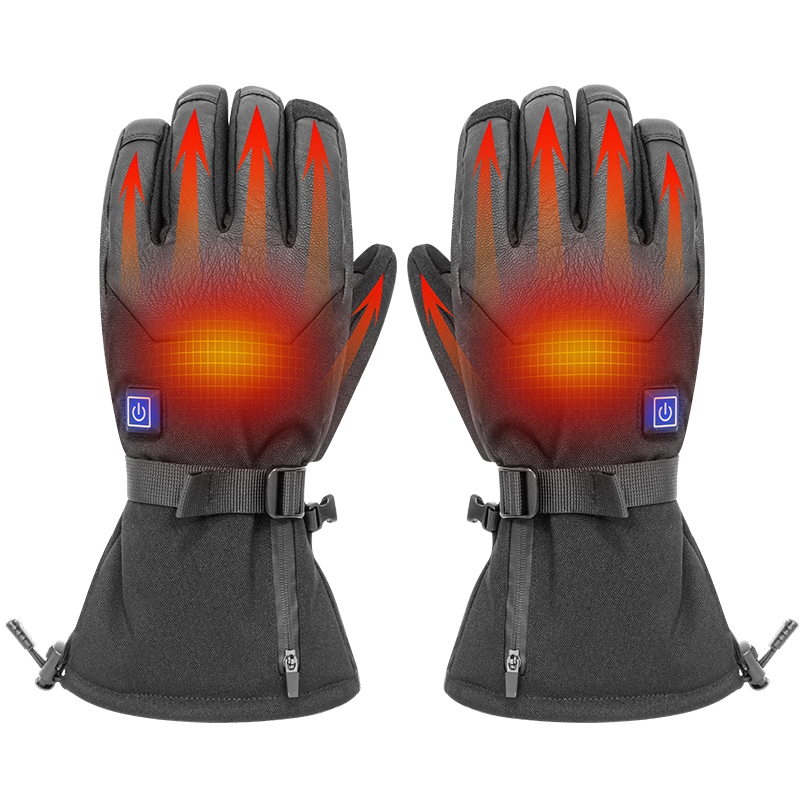
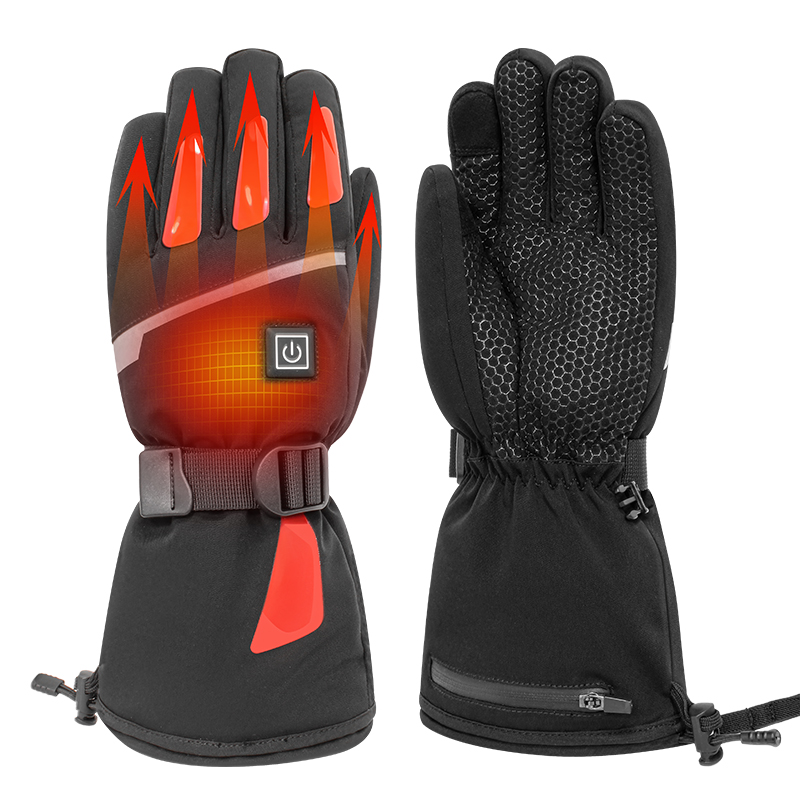
Heated Gloves
Gloves have individual finger compartments, meaning each finger is separated by fabric and insulation. Heating elements run along the back of the hand and into each finger individually. This design preserves finger dexterity but creates more surface area for heat loss, as each finger is surrounded by cold air on multiple sides.
Heated Mittens
Mittens enclose all four fingers in a single compartment, with a separate slot for the thumb. Heating elements cover the back of the hand and the unified finger compartment. This design significantly reduces surface area for heat loss because fingers share warmth through direct contact — but it eliminates individual finger movement.
The physics is clear: mittens are inherently warmer than gloves, even without heating. Adding active heating widens this gap further, because the shared finger compartment allows heating elements to warm a smaller, more concentrated space.
Detailed Comparison: Heated Gloves vs. Heated Mittens
1. Warmth Performance
Winner: Heated Mittens
Mittens are warmer for three reasons:
- Shared body heat: Your fingers warm each other through direct contact, creating a microclimate inside the mitten
- Less surface area: A mitten exposes less total surface area to cold air than a glove with five separate fingers
- More efficient heating: Heating elements warm a single enclosed space rather than five individual finger compartments, so less energy is lost
In practical terms, a heated mitten on medium setting often feels as warm as a heated glove on high setting. This means mittens can achieve comfortable warmth at lower heat settings, extending battery life significantly.
2. Dexterity and Functionality
Winner: Heated Gloves
This isn’t close. Gloves allow individual finger movement, which is essential for:
- Operating touchscreens (phones, GPS devices, cameras)
- Gripping ski poles, handlebars, or tools
- Adjusting zippers, buckles, and equipment
- Trigger operation for hunting
- Tying knots, handling small objects
- Driving and using keys
Mittens force you to use your thumb and the side of your hand for most fine motor tasks — a frustrating and often impossible compromise. Some heated mittens include a fold-back finger compartment for temporary dexterity, but this compromises insulation and heating when open.
3. Battery Life
Winner: Heated Mittens
Because mittens are inherently warmer, users typically operate them on lower heat settings than gloves. Lower settings mean less power draw and longer runtime. A heated mitten on low may provide the same perceived warmth as a heated glove on medium — extending battery life by 30–50%.
Additionally, mittens have fewer heating zones to power. A glove with five individual finger heating elements draws more current than a mitten with a single large heating panel covering the finger compartment.
4. Use Case Suitability
Winner: Depends on Activity
The right choice depends entirely on what you’re doing:
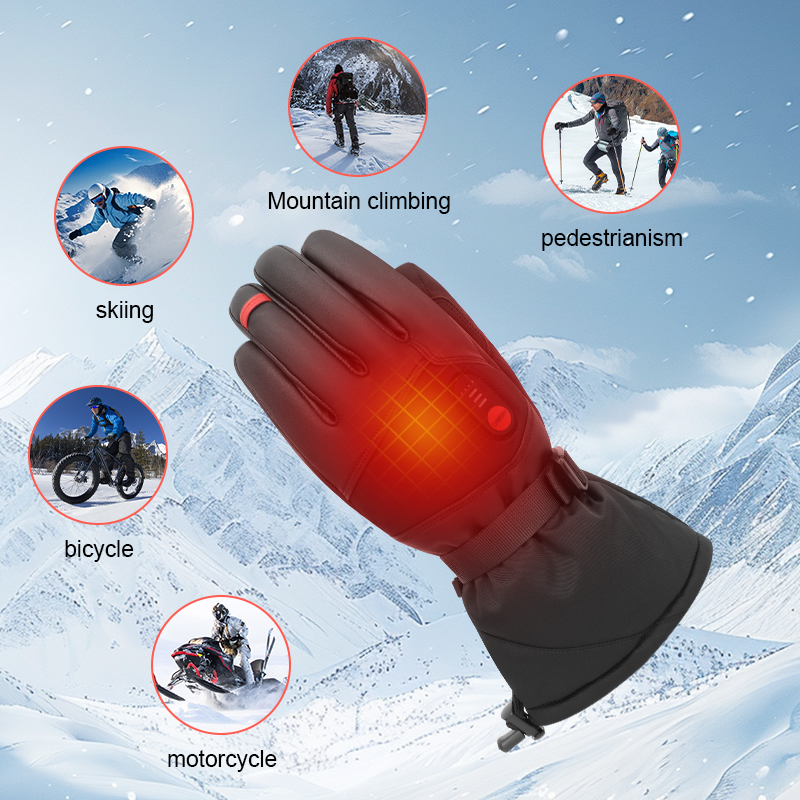
| Activity | Recommended Type | Why |
| Skiing / Snowboarding | Gloves | Need pole grip and binding adjustment |
| Snowmobiling | Either | Gloves for throttle control; mittens for passenger warmth |
| Motorcycle Riding | Gloves | Essential for brake, clutch, and throttle control |
| Hunting | Gloves | Trigger operation requires finger dexterity |
| Ice Fishing | Mittens | Minimal dexterity needed; maximum warmth preferred |
| Shoveling / Outdoor Work | Gloves | Need grip and tool handling |
| Spectator / Cold Commute | Mittens | Warmth priority over dexterity |
| Hiking / Snowshoeing | Either | Gloves for trekking poles; mittens for maximum warmth |
| Raynaud’s / Poor Circulation | Mittens | Maximum warmth for medical conditions |
5. Comfort and Fit
Winner: Tie
Both heated gloves and heated mittens can be equally comfortable when properly sized. However, there are differences:
- Gloves feel more natural and less restrictive, but require more precise sizing — each finger compartment must fit correctly
- Mittens allow more finger movement within the shared compartment, but can feel clumsy and unfamiliar to glove users
- Heating element feel: In gloves, you feel heating elements along each finger. In mittens, the heating panel covers the back of your hand with fingers resting against warm fabric
6. Price and Value
Winner: Heated Mittens (slight edge)
Heated mittens are often slightly less expensive than equivalent-quality heated gloves because they require less material and fewer heating zones. However, the price difference is typically only 10–15%. The bigger value consideration is that mittens often last longer on a single charge, meaning fewer spare batteries needed.
When to Choose Heated Gloves
Choose heated gloves if you:
- Need finger dexterity for any activity (skiing, riding, hunting, working)
- Want to use your phone or touchscreen devices without removing handwear
- Participate in multiple winter activities and want one versatile pair
- Need to grip poles, handlebars, tools, or equipment
- Prefer the familiar feel of traditional gloves
- Want more style options (gloves come in more designs than mittens)
Best heated gloves for all-around use: Look for models with carbon fiber heating elements, full-finger heating coverage, 3,000mAh+ batteries, and waterproof construction. Manufacturers like NRheat produce heated gloves designed for skiing, motorcycle riding, and hunting — each optimized for the specific dexterity and heating needs of that activity.
When to Choose Heated Mittens
Choose heated mittens if you:
- Prioritize maximum warmth above all else
- Have poor circulation, Raynaud’s syndrome, or are prone to cold fingers
- Engage in activities that don’t require fine finger movement (ice fishing, spectating, walking)
- Want longer battery life per charge
- Are willing to remove mittens temporarily for tasks requiring dexterity
- Need warmth in extreme cold (below 0°F / -18°C) where even heated gloves struggle
Best heated mittens for extreme cold: Look for models with heavy insulation (200g+), large heating panels covering both back of hand and finger compartment, 5,000mAh batteries, and extended gauntlet cuffs. Premium heated mittens can maintain comfortable warmth at -20°F (-29°C) for 4+ hours on medium settings.
The Hybrid Solution: Convertible Heated Gloves
Some manufacturers offer convertible heated gloves — a hybrid design where the finger compartment can fold back to expose your fingers when needed, then close to function as a mitten for warmth. These offer the best of both worlds but have trade-offs:
Pros:
- Switch between glove and mitten mode without removing handwear
- Heating elements cover both configurations
- Versatile for activities with varying dexterity needs
Cons:
- Fold-back mechanism adds bulk and weight
- Insulation is compromised at the fold point
- More expensive than standard gloves or mittens
- Heating elements may be less effective in mitten mode due to design constraints
Heating Technology: Is There a Difference?
Both heated gloves and heated mittens use the same underlying heating technology:
- Carbon fiber heating elements — the standard in premium heated handwear, offering even heat distribution and flexibility
- 7.4V lithium-ion batteries — consistent power delivery across both types
- Multiple heat settings — typically 3 levels (low, medium, high) with LED indicators
- Safety features — overheat protection, short-circuit protection, and waterproof battery housings
The difference is in how efficiently that technology works. Mittens require less heating element material to achieve the same perceived warmth, making them more energy-efficient. Gloves spread heating elements across more surface area, requiring more power for equivalent warmth.
Quality manufacturers like NRheat produce both heated gloves and heated mittens using the same carbon fiber heating technology and battery systems — allowing customers to choose the form factor that best suits their needs while maintaining consistent quality and performance.
Frequently Asked Questions
Are heated mittens warmer than heated gloves?
Yes. Mittens are inherently warmer because fingers share body heat in a single compartment, and heating elements warm a smaller enclosed space. A heated mitten on medium often feels as warm as a heated glove on high.
Can I ski with heated mittens?
Yes, but you’ll have less grip on your poles. Many skiers prefer heated gloves for pole control, while others use heated mittens and remove them temporarily when adjusting bindings. Convertible designs offer a compromise.
Which lasts longer on battery: heated gloves or mittens?
Heated mittens typically last 30–50% longer per charge because they require lower heat settings to achieve the same warmth and have fewer heating zones to power.
Are heated mittens good for motorcycle riding?
No. Motorcycle riding requires individual finger control for brake, clutch, and throttle operation. Heated gloves are essential for safe riding.
Can I get heated gloves and heated mittens from the same manufacturer?
Yes. Quality manufacturers like NRheat produce both types using the same heating technology and battery systems, allowing you to choose the best option for each activity.
Conclusion
The choice between heated gloves and heated mittens ultimately comes down to a simple trade-off: dexterity versus warmth.
If your winter activities require finger movement — skiing, riding, hunting, working — heated gloves are the clear choice. Modern carbon fiber heating technology and high-capacity batteries make quality heated gloves effective even in extreme cold.
If maximum warmth is your priority and you can live with reduced dexterity — or if you suffer from poor circulation — heated mittens deliver superior thermal performance and longer battery life.
For those who want both, consider owning a pair of each: heated gloves for active days when dexterity matters, and heated mittens for extreme cold or low-activity situations where warmth is everything.
For brands and retailers, NRheat offers OEM and ODM manufacturing for both heated gloves and heated mittens, using consistent carbon fiber heating technology, 7.4V lithium-ion battery systems, and comprehensive safety certifications. Their 16+ years of heated apparel expertise means both product types deliver the same level of quality, warmth, and reliability — the choice is simply which form factor serves your customers best.
Whatever you choose, the key is investing in quality heated handwear with proven heating technology, adequate battery capacity, and the safety certifications that ensure reliable performance in any winter condition.


