The concept of heated pants is simple: press a button, and your trousers generate warmth. But the engineering that makes this possible is surprisingly sophisticated. From advanced battery chemistry and conductive heating elements to intricate wiring harnesses and intelligent controllers, every component in heated pants is designed to deliver safe, efficient, and comfortable heat. This deep dive explains the technology behind battery heated pants, helping you understand what you are paying for and how to evaluate quality when shopping.
The Three Core Subsystems
Every pair of heated pants relies on three integrated subsystems:
- The Power Source: Rechargeable batteries that store and deliver electrical energy.
- The Heating Network: Conductive panels and wiring that convert electricity into radiant heat.
- The Control System: User interfaces and safety circuits that regulate temperature and protect against malfunctions.
These systems must work in harmony while enduring the unique stresses of a garment—bending, stretching, washing, and exposure to sweat and weather.
Battery Technology: The Power Plant
Lithium-Ion Dominance
The vast majority of heated pants use lithium-ion (Li-ion) or lithium-polymer (Li-Po) battery packs. These battery chemistries have become the global standard for portable electronics because they offer the highest energy density of any rechargeable technology. In practical terms, this means more stored power per ounce of weight—a critical factor for wearable garments.
A typical heated pants battery operates at 7.4 volts and offers capacities between 4,000mAh and 7,000mAh. Higher-capacity batteries provide longer runtime but are physically larger and heavier. Manufacturers must balance these trade-offs based on the intended use of the pants.
Understanding Voltage and Capacity
Two numbers define battery performance:
- Voltage (V): Determines how much electrical potential the battery can deliver. Most heated pants use 7.4V systems (two 3.7V cells wired in series). Some premium models use 12V systems for higher heat output.
- Capacity (mAh): Indicates how much charge the battery can store. A 5,000mAh battery can deliver 5,000 milliamps for one hour, or 1,000 milliamps for five hours.
To calculate total energy storage, multiply voltage by capacity and divide by 1,000:
Watt-hours (Wh) = Voltage (V) × Capacity (mAh) ÷ 1,000
For example, a 7.4V battery with 5,000mAh capacity stores 37Wh of energy. If your heated pants draw 7 watts on medium heat, you can expect roughly 5.3 hours of runtime.
Battery Management Systems (BMS)
A battery pack is more than just cells in a plastic case. The Battery Management System is an electronic circuit that performs several critical functions:
- Overcharge Protection: Prevents cells from exceeding safe voltage limits during charging, which could cause thermal runaway or fire.
- Over-Discharge Protection: Disconnects power when cells drop below minimum voltage, preventing irreversible damage.
- Cell Balancing: Ensures all cells in a multi-cell pack charge and discharge evenly, maximizing lifespan and performance.
- Temperature Monitoring: Shuts down the battery if internal temperatures exceed safe thresholds.
- Short-Circuit Protection: Instantly disconnects power if a short circuit is detected.
Cheap heated pants often skimp on BMS quality, using minimal or poorly designed circuits. This compromises both safety and battery longevity. Reputable manufacturers invest in robust BMS designs and use name-brand battery cells from suppliers like Samsung, LG, or Panasonic.
Charging Technology
Most heated pants batteries charge via standard USB or dedicated wall adapters. Charge times typically range from 3 to 5 hours for a full charge. Some advanced models support fast charging, reaching 80% capacity in under two hours.
Users should follow manufacturer guidelines: avoid exposing batteries to extreme temperatures, do not puncture or disassemble packs, and store batteries with partial charge during long off-seasons.
Heating Elements: Converting Electricity to Warmth
Carbon Fiber Panels
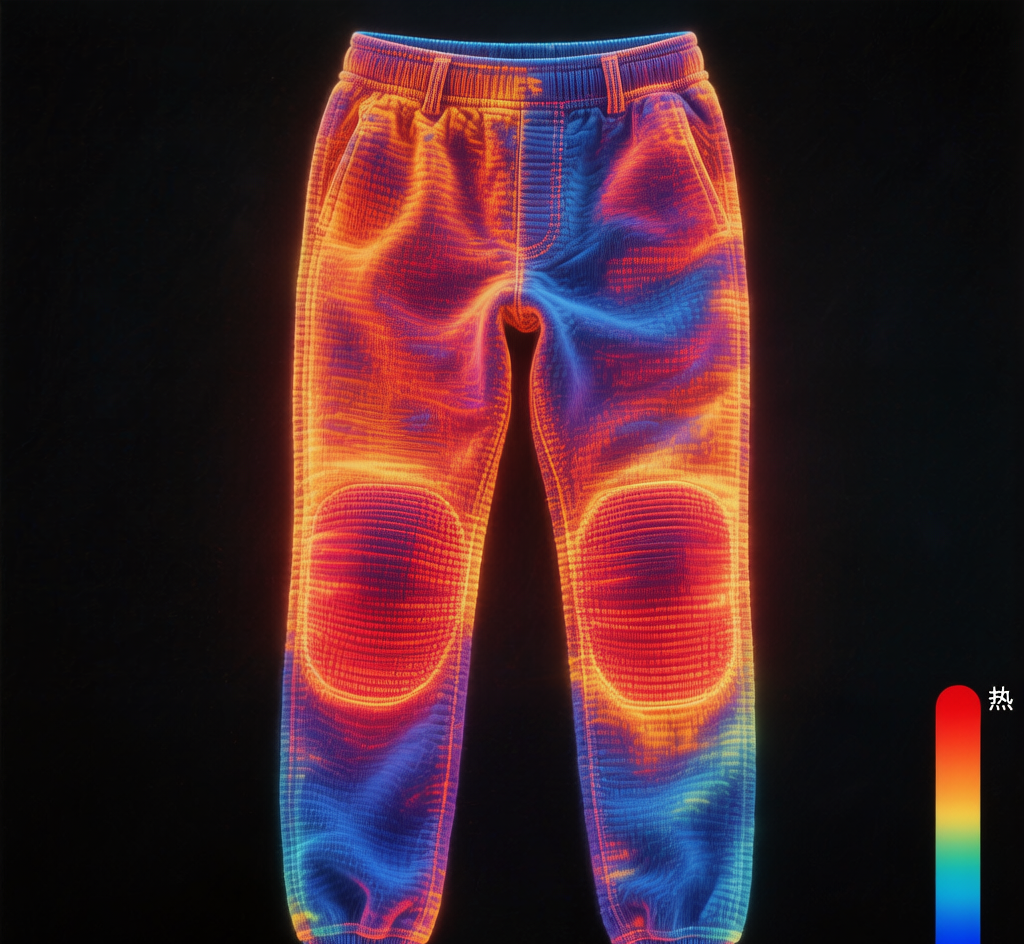
The most common heating technology in heated pants is carbon fiber. These panels consist of thin, flexible mats woven from carbon filaments. When electrical current passes through carbon fiber, the material’s electrical resistance generates heat through Joule heating.
Advantages of Carbon Fiber:
- Flexibility: Carbon fiber panels bend and flex with the garment, maintaining comfort during movement.
- Even Heat Distribution: The woven structure disperses heat uniformly, preventing uncomfortable hot spots.
- Fast Response: Panels reach operating temperature within seconds of activation.
- Durability: Carbon fiber resists corrosion, fatigue, and repeated mechanical stress.
- Lightweight: Panels add minimal weight—often just a few ounces per zone.
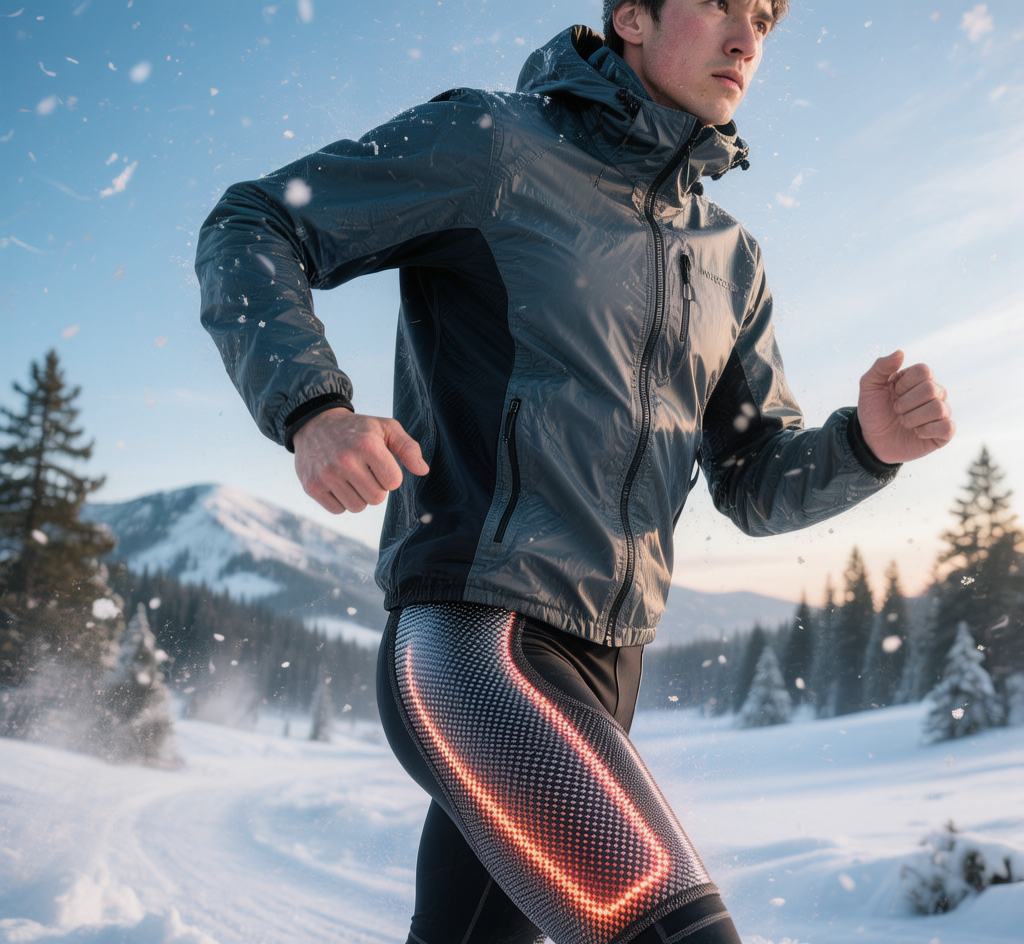
In heated pants, carbon fiber panels are typically positioned at the thighs, knees, and sometimes the lower back or hips. Manufacturers laminate these panels between fabric layers to protect them and improve heat transfer toward the wearer.
Alloy Wire Systems
Some heated pants use metal alloy wires—commonly stainless steel or copper-nickel blends—arranged in serpentine patterns. These wires are thinner than carbon fiber panels and can be sewn directly into fabric channels.
Characteristics of Wire Systems:
- Higher Heat Output: Metal alloys can achieve slightly higher peak temperatures.
- Lower Cost: Wire-based heating is generally cheaper to manufacture.
- Less Flexibility: Wires are more rigid than carbon fiber mats and may be perceptible to sensitive wearers.
- Hot Spot Risk: Poorly designed wire layouts can create uneven heating along the wire path.
Emerging Graphene Technology
Graphene, a single-atom-thick layer of carbon, represents the next frontier in heating technology. Graphene heating films are extraordinarily thin, flexible, and efficient. They heat up faster than carbon fiber and distribute heat more uniformly.
While still relatively rare due to higher costs, graphene is beginning to appear in premium heated pants. As production scales and prices fall, expect graphene to become a mainstream alternative.
Wiring Harnesses: The Invisible Network
Connecting batteries to heating elements requires a network of conductive wires integrated into the garment. This wiring harness presents unique engineering challenges:
Flexibility Requirements
Unlike wires in stationary electronics, the harness in heated pants must survive thousands of bending cycles per day. Engineers use stranded conductors—bundles of thin wires rather than single solid cores—to improve flexibility. Insulation materials must also bend without cracking or degrading.
Moisture and Sweat Protection
The wiring harness operates in a hostile environment: pressed against sweaty skin, exposed to snow and rain, and subjected to repeated washing. Connections are sealed with heat-shrink tubing, waterproof connectors, or encapsulation in flexible polymers. Wires are routed through fabric channels or laminated between layers to prevent wearer contact.
Strain Relief
Points where wires connect to batteries, controllers, and heating panels are vulnerable to mechanical stress. Strain relief features—reinforced sleeves, flexible grommets, and redundant anchoring—prevent wires from pulling free during movement.
Control Systems: Regulating the Experience
Physical Button Controllers
The majority of heated pants use a simple button interface, usually located on the waistband or front thigh. Pressing the button cycles through heat settings:
- Low: Approximately 100–110°F (38–43°C)
- Medium: Approximately 110–120°F (43–49°C)
- High: Approximately 120–135°F (49–57°C)
LED indicators adjacent to the button display the active setting, typically using blue for low, white or green for medium, and red for high.
Bluetooth and App Integration
Premium heated pants are beginning to incorporate Bluetooth Low Energy (BLE) connectivity. Paired smartphone apps unlock advanced features:
- Precise Temperature Control: Set exact temperatures rather than preset levels.
- Zone Independence: Control thigh and knee zones separately.
- Battery Monitoring: View real-time remaining capacity and estimated runtime.
- Timer Functions: Schedule automatic shutoff to conserve battery.
- Firmware Updates: Receive performance improvements over time.
While app control adds cost and complexity, it delivers unmatched personalization and convenience.
Thermal Safety Mechanisms
Safety is paramount in any wearable electrical device. Reputable heated pants incorporate multiple protective layers:
Temperature Sensors
Thermistors embedded near heating elements monitor temperatures continuously. If readings exceed safe thresholds—typically around 140°F (60°C)—the controller reduces power or shuts down the affected zone entirely.
Automatic Shutoff Timers
Many heated pants include timers that deactivate heating after a preset duration, commonly 3 to 6 hours. This prevents unattended operation, conserves battery, and reduces fire risk.
Redundant Insulation
Heating elements are never placed directly against skin. Multiple fabric layers provide thermal buffering and ensure that even malfunctioning panels do not cause burns.
Low-Voltage Design
Operating at 7.4V or 12V eliminates the risk of dangerous electric shock. These voltages are considered safe for consumer products and are far below thresholds that could harm human tissue.
Integration with Passive Materials
The best heated pants do not rely solely on electrical heating. They integrate active heating with traditional textile strategies:
Reflective Linings
Some models incorporate metallic reflective layers that bounce radiant heat back toward the body, improving thermal efficiency and reducing power consumption.
Strategic Insulation
Insulation is concentrated in areas without heating panels—such as the lower legs or waistband—to reduce weight while maintaining overall warmth.
Windproof and Water-Resistant Shells
The outer fabric blocks convective and evaporative heat loss, allowing the heating system to work more efficiently. This means lower power settings achieve equivalent comfort.
Conclusion
The technology inside heated pants is a remarkable achievement in wearable engineering. From high-density lithium-ion batteries and flexible carbon fiber heating panels to sophisticated control systems and multi-layered safety mechanisms, every component is optimized for performance, comfort, and reliability.
Understanding this technology empowers you as a buyer. You can evaluate battery specifications, distinguish quality heating elements from cheap alternatives, and recognize the safety features that protect you during use. Whether you are shopping for your first pair of heated pants or upgrading to a premium model, this knowledge ensures you invest wisely in gear that keeps you warm, safe, and comfortable through every winter adventure.