Minimum order quantity, or MOQ, is one of the most common barriers preventing entrepreneurs and small brands from entering the heated apparel market. Many manufacturers advertise MOQs of 1,000 or even 5,000 units, which can represent an investment of tens of thousands of dollars before a single product reaches the market. However, the reality is more nuanced. Understanding how MOQ works, what drives it, and how to negotiate effectively can open doors to manufacturers that appear out of reach. This guide breaks down everything you need to know about MOQ for heated jackets.
What Is MOQ and Why Does It Matter?
MOQ is the minimum number of units a manufacturer will produce in a single order. It exists because manufacturing efficiency depends on scale. Setting up a production line, sourcing materials, configuring heating elements, and conducting quality control all involve fixed costs that must be spread across the units produced. Below a certain quantity, the per-unit cost becomes prohibitively high.
For heated jackets specifically, the MOQ is driven by several factors that differ from standard apparel. Heating elements must be produced in batch runs to ensure consistency. Battery packs are sourced from specialist suppliers with their own MOQs. Wiring harnesses require custom assembly. And quality control testing, including aging tests and electrical safety tests, must be performed on every batch. These factors combine to create a higher baseline MOQ than non-heated garments.
Typical MOQ Ranges for Heated Jackets
MOQs vary significantly depending on the manufacturer, the level of customisation, and the product type. Here is a general guide to what you can expect:
- Stock products with logo branding only: 100-300 units. The manufacturer uses existing designs and materials, applying your logo and packaging.
- Custom colour and minor specification changes: 300-500 units. You can select from the manufacturer’s available fabrics and adjust battery capacity or heating zone configuration.
- Full custom design (ODM): 500-1,000 units. The manufacturer creates a new product based on your specifications, including custom patterns, materials, and heating system design.
- Bespoke tooling and proprietary components: 1,000-3,000 units. Custom moulded parts, exclusive fabric development, or patented heating element configurations.
These ranges are indicative. Some manufacturers, particularly those with flexible production capabilities and in-house component manufacturing, can offer lower MOQs. NRheat, for example, accepts customised small orders to meet unique client requirements, making it possible to start with as few as 50 to 100 units for certain product types.
The Sample Ordering Process
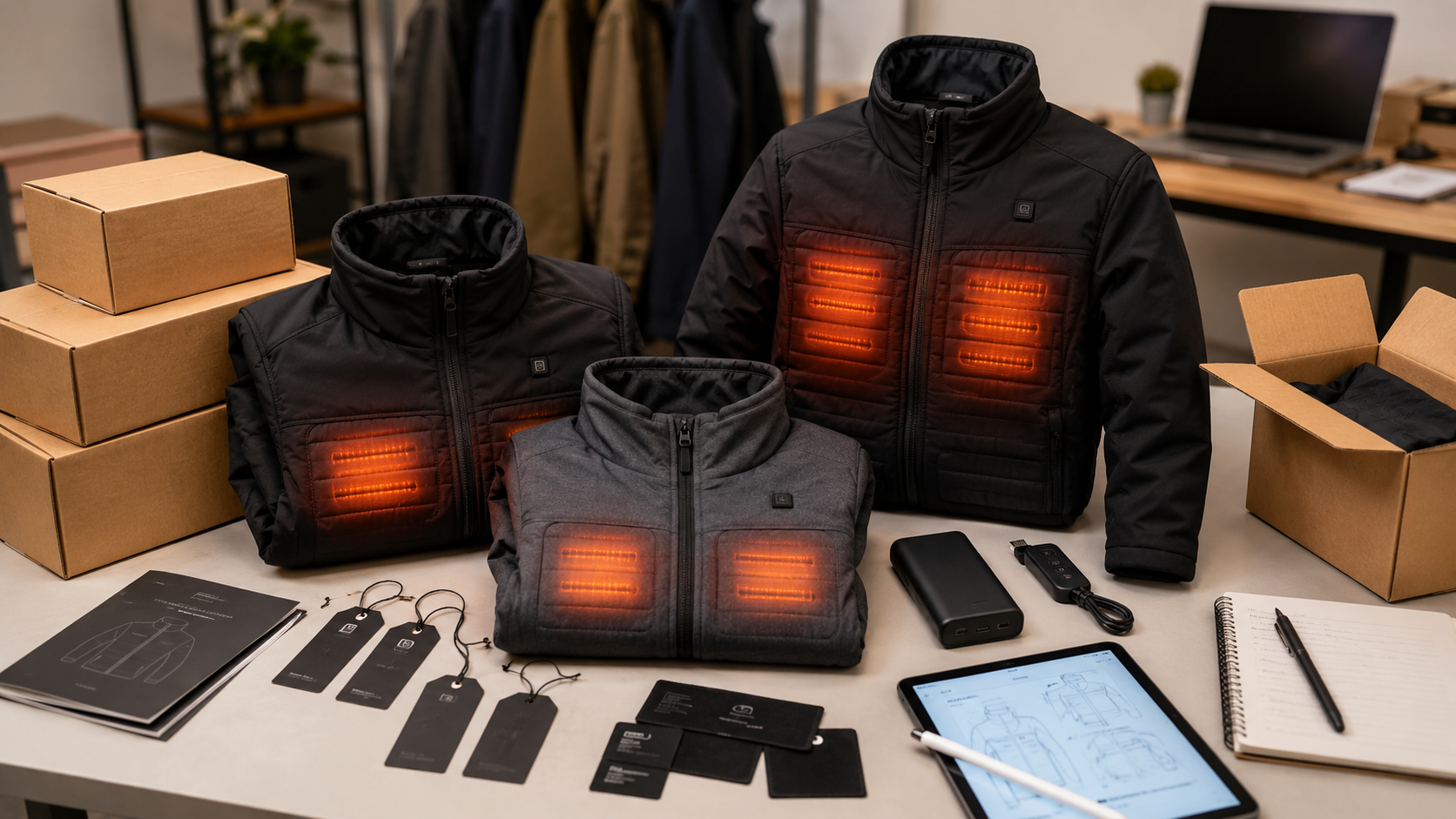
Before committing to any production MOQ, you should always order samples. The sampling process typically works as follows:
First, request a stock sample. This is a unit from the manufacturer’s existing inventory, without your branding. It allows you to evaluate the product quality, heating performance, and fit. Stock samples are usually priced at or near retail value and can be shipped within a week.
Second, if the stock sample meets your standards, request a custom sample. This is a unit produced with your logo, colour preferences, and any specification adjustments. Custom samples typically cost two to three times the expected production unit price and take two to four weeks to produce. The higher cost reflects the setup time required for a one-off production run.
Use the custom sample for photography, marketing material creation, and if possible, field testing with potential customers. The feedback you gather at this stage is invaluable for refining your product before committing to a full production order.
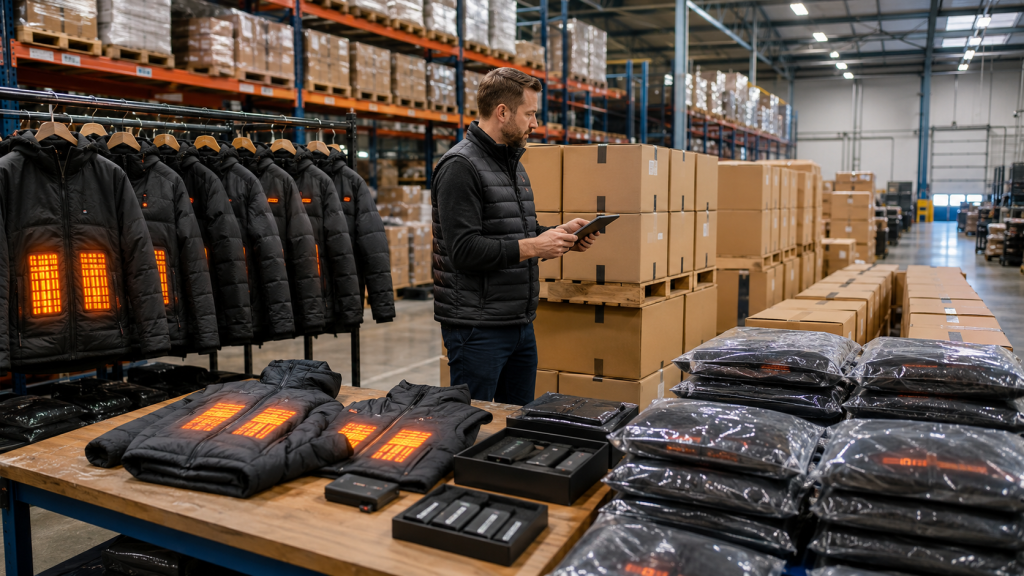
Scaling from Samples to Production
Once you have validated your product through sampling, the scaling process follows a logical progression:
Phase 1: Pilot Production (50-100 units)
A pilot run allows you to test the market with a small inventory. This is particularly valuable for e-commerce brands selling through their own websites or platforms like Shopify. At this volume, you should expect higher per-unit costs, but the lower total investment reduces your risk. Use the pilot run to gather customer feedback, refine your marketing message, and identify any quality issues.
Phase 2: First Production Order (300-500 units)
With market validation from your pilot run, you can place a standard production order. At this volume, per-unit costs drop significantly, and you gain access to custom packaging and specification options. Plan your inventory carefully, as heated apparel is seasonal and excess inventory carried over to the next season ties up capital.
Phase 3: Scale Production (1,000+ units)
Once you have consistent sales data and a clear understanding of demand, you can place larger orders that unlock the best pricing and full customisation. At this stage, consider negotiating annual volume contracts with your manufacturer to secure preferred pricing and production slot priority during peak season.
Cost Structure at Different Volumes
Understanding how per-unit cost changes with volume is essential for pricing strategy and profit margin planning. While exact numbers vary by product and manufacturer, a typical heated jacket might follow this cost curve:
- Sample (1 unit): $120-$180
- Pilot run (50 units): $65-$85 per unit
- Standard order (300 units): $45-$60 per unit
- Volume order (1,000 units): $32-$45 per unit
- Large volume (3,000+ units): $25-$35 per unit
These figures are illustrative. Actual costs depend on materials, heating system specifications, battery capacity, and customisation level. However, the pattern is consistent: the largest cost reduction occurs between the pilot run and the standard order, making the 300-unit threshold a critical milestone for profitability.
Negotiating MOQ with Manufacturers
If a manufacturer’s stated MOQ exceeds your budget, do not walk away immediately. MOQ is often negotiable, particularly if you can demonstrate a credible growth plan. Here are strategies for negotiating lower MOQs:
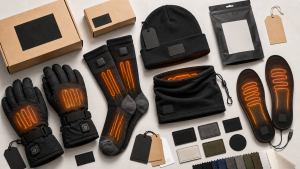
Offer to pay a slightly higher per-unit price in exchange for a lower quantity. Manufacturers are often willing to accept smaller orders if the margin compensates for the reduced efficiency. Commit to a follow-up order within a specified timeframe. A manufacturer may accept a smaller initial order if you sign a letter of intent for a larger order within three to six months. Combine multiple products into a single order. If you need 100 heated gloves and 100 heated socks, the combined order of 200 units may meet the manufacturer’s MOQ threshold even if neither product alone does.
The key to successful negotiation is demonstrating that you are a serious, long-term partner, not a one-time buyer. Manufacturers invest time in onboarding new clients, and they want assurance that the relationship will grow.
Looking for a heated jacket manufacturer with flexible MOQs? NRheat accepts customised small orders and offers a transparent sampling process. From 500-unit pilot runs to full-scale production, we scale with your brand. Contact us to discuss your requirements.