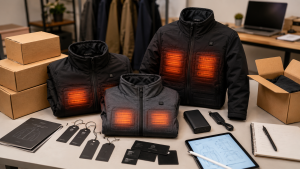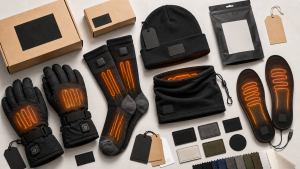

In industries where workers face both extreme cold and fire hazards, standard heated clothing is not just inadequate, it is dangerous. A heated jacket with standard polyester shell and unprotected wiring can ignite or melt when exposed to sparks, open flames, or radiant heat. Fireproof heated jackets solve this dual challenge by combining flame-resistant materials with safe, certified heating systems. This guide explains what buyers need to know when sourcing fireproof heated workwear for industrial applications.
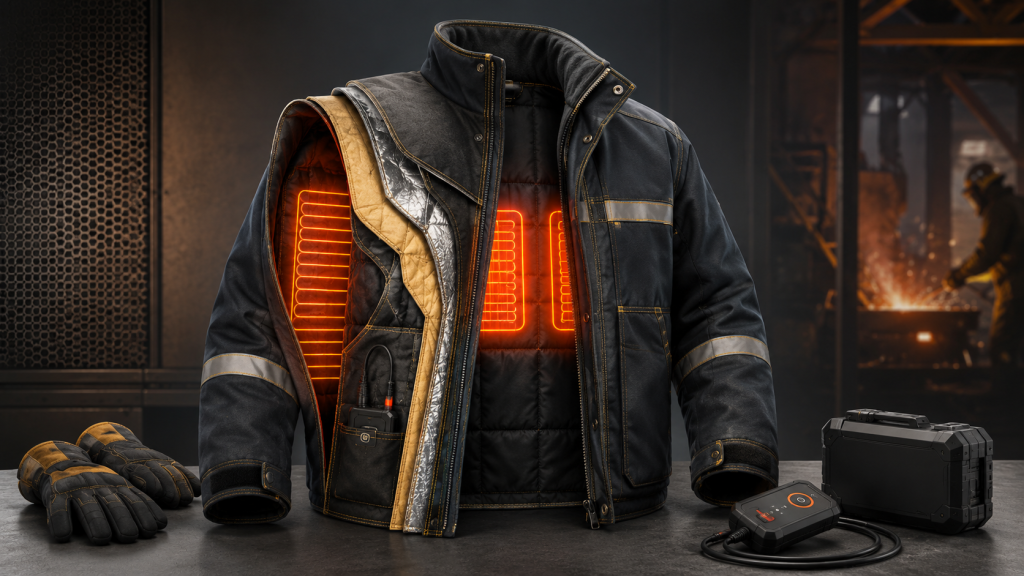
What Makes a Heated Jacket Fireproof?
A truly fireproof heated jacket must address two distinct fire risks: external flame exposure and internal electrical fire. The external protection comes from flame-resistant (FR) fabrics and materials that will not ignite, melt, or continue to burn when exposed to heat sources. The internal protection comes from the design of the heating system, battery, and wiring, which must be shielded and rated for use in hazardous environments.
It is important to understand the distinction between flame-resistant and flame-retardant. Flame-resistant fabrics, such as Nomex and Kevlar, have inherent fire-resistant properties built into the fibre chemistry. Flame-retardant fabrics are treated with chemical coatings that slow ignition but may degrade over time with washing. For industrial applications where fire exposure is a regular risk, flame-resistant fabrics are strongly preferred.
Key Flame-Resistant Materials Used in Heated Workwear
Aramid Fibres (Nomex and Kevlar)
Aramid fibres are the gold standard for flame-resistant clothing. Nomex does not melt, drip, or support combustion in air. It carbonises and thickens when exposed to extreme heat, providing a protective barrier. Kevlar adds tear and abrasion resistance, making it ideal for workwear that must withstand both fire hazards and physical wear. Heated jackets using aramid fibre shells can withstand flash temperatures of several hundred degrees Celsius without igniting.
Modacrylic Blends
Modacrylic fibres are inherently flame-resistant and are often blended with cotton or other fibres to improve comfort and reduce cost. Modacrylic blends are commonly used in industrial workwear where 100 percent aramid construction is prohibitively expensive. These blends self-extinguish when removed from the flame source and do not melt or drip.
Treated Cotton and FR-Treated Fabrics
For budget-conscious applications, cotton fabrics treated with flame-retardant chemicals offer a lower-cost alternative. These treatments are effective but may diminish with repeated washing. Manufacturers should provide wash cycle ratings indicating how many washes the FR treatment remains effective. For heavy industrial use, treated fabrics may need to be re-treated or replaced more frequently than inherent FR materials.
Safety Certifications and Standards
Fireproof heated jackets for industrial use should comply with recognised safety standards. The specific standards required depend on the industry and region, but common certifications include:
- NFPA 70E (United States): Standard for electrical safety in the workplace, relevant for workers exposed to electrical arc flash hazards
- EN ISO 11612 (European Union): Performance requirements for clothing providing protection against heat and flame
- EN ISO 11611 (European Union): Protective clothing for use in welding and allied processes
- ASTM F1959 (United States): Standard test method for determining the arc rating of materials for clothing
- IECEx / ATEX (International/European): Certification for equipment used in explosive atmospheres, relevant for oil and gas applications
The heating system itself must also be certified. Battery packs should comply with UN38.3 for transportation safety and have IP-rated enclosures for dust and water resistance. The heating elements should be sealed within flame-resistant fabric layers, with no exposed wiring accessible from the exterior.
Industrial Applications Requiring Fireproof Heated Jackets
Oil and Gas Industry
Workers on drilling rigs, refineries, and pipelines operate in environments where both extreme cold and fire hazards coexist. Offshore platforms in the North Sea and onshore facilities in Siberia and Alaska require heated workwear that will not become a fire hazard in the event of a gas leak or flash fire.
Welding and Metal Fabrication
Welders work in cold shops and outdoor construction sites while being exposed to sparks and spatter. Standard heated jackets pose a serious risk because sparks can ignite synthetic fabrics or damage exposed heating elements. Fireproof heated jackets with leather or aramid reinforcement in spark-exposed areas allow welders to stay warm without compromising safety.
Electrical Utility Work
Linemen and electrical workers performing maintenance in winter conditions face arc flash hazards. Heated jackets for these applications must meet arc flash protection standards in addition to providing warmth. The battery and heating system must be contained within the arc-rated garment layers, not worn as a separate layer that could ignite.
Key Features to Look For
When evaluating fireproof heated jackets, look for these critical features:
- Inherent FR outer shell (aramid or modacrylic blend) with documented certification
- Fully enclosed heating elements with no external wiring exposure
- Battery pack housed in a flame-resistant, impact-resistant enclosure
- Overheat protection with automatic shutoff at 45 degrees Celsius
- Washable construction with documented wash cycle rating for FR performance
- High-visibility elements (reflective tape) for jobsite safety compliance
- Reinforced panels in spark-exposed areas (chest, forearms, shoulders)
Supplier Evaluation Checklist
Before placing an order for fireproof heated jackets, request the following from potential suppliers:
Documentation of FR fabric certification, including test reports from accredited laboratories. Evidence of heating system safety testing, including overheat protection validation. A list of industrial clients currently using their fireproof heated products. Sample units for field testing in your specific working environment. A clear warranty policy that covers both the garment and the heating system.
Do not accept verbal assurances. Every safety claim should be backed by documentation. A manufacturer that cannot provide certification documents is not qualified to produce fireproof heated workwear, regardless of price.
Need fireproof heated jackets for your industrial workforce? NRheat produces flame-resistant heated workwear with certified FR materials, enclosed heating systems, and overheat protection. Contact us to discuss your safety requirements and request certified samples.