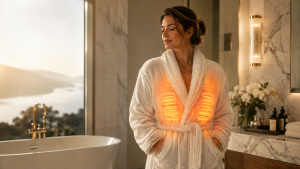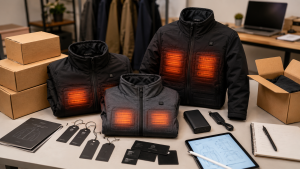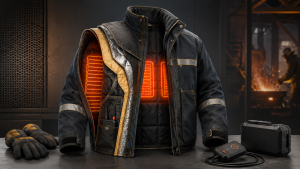

The heated accessories market is growing rapidly as consumers discover the benefits of battery-powered warmth for gloves, socks, hats, and scarves. For entrepreneurs and established brands looking to enter this market without investing in manufacturing infrastructure, private labeling offers a fast and cost-effective path to launch. This guide covers everything you need to know about private labeling heated accessories, from selecting products to designing packaging and managing your first production run.
What Is Private Labeling in Heated Apparel?
Private labeling is a business model where you purchase products from a manufacturer and sell them under your own brand name. The manufacturer handles production, quality control, and sometimes packaging, while you focus on branding, marketing, and sales. In the heated accessories market, private labeling allows you to launch a branded product line without the significant capital investment required to set up a heating element production line, battery testing facility, and garment assembly operation.
Private labeling differs from OEM (where the manufacturer produces to your exact design specifications) and ODM (where the manufacturer designs the product for you). In a pure private label arrangement, you select from the manufacturer’s existing product catalogue and apply your branding. This makes it the fastest and most affordable option for new entrants.
Heated Accessories Available for Private Label
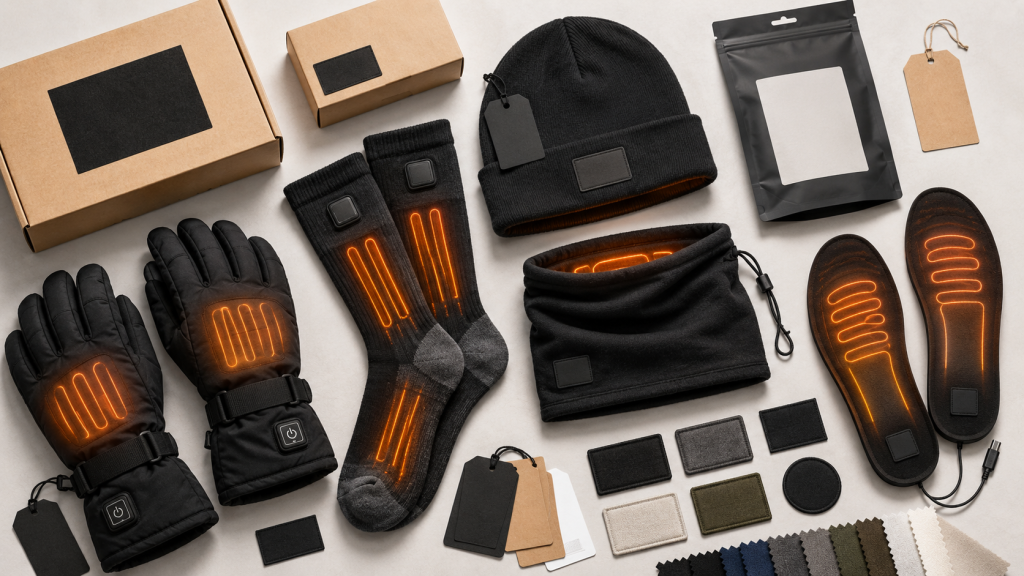
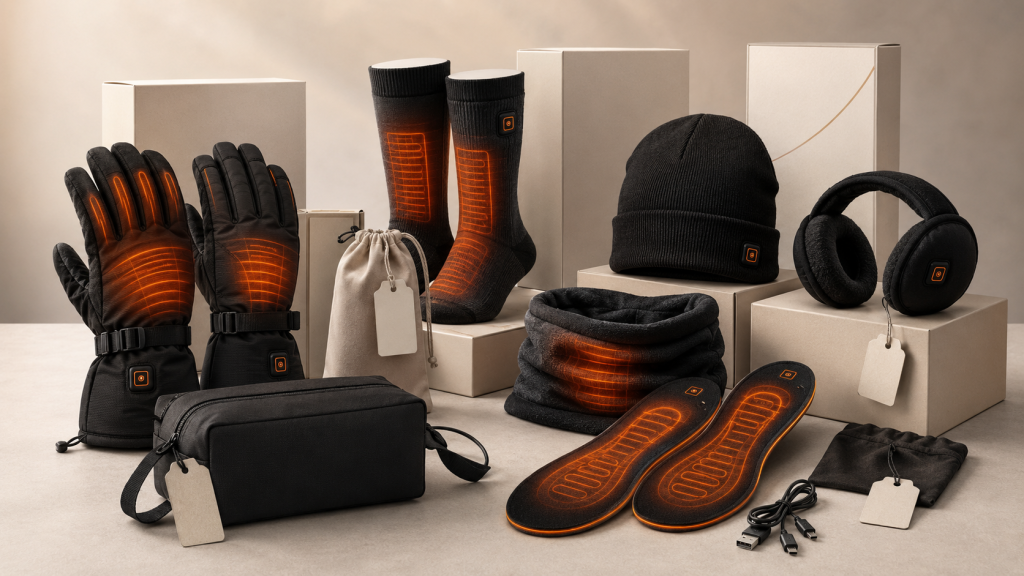
The range of heated accessories available for private labeling extends well beyond gloves. Consider these product categories when building your brand portfolio:
- Heated gloves: The largest category, with options for skiing, hunting, motorcycle riding, and everyday winter use
- Heated socks: Growing demand from outdoor enthusiasts, construction workers, and people with circulation issues
- Heated hats and beanies: Compact, affordable accessories with broad consumer appeal
- Heated scarves and neck warmers: Niche but growing category, particularly in fashion-forward markets
- Heated insoles: Popular among hikers, hunters, and workers who stand for long periods
- Heated hand warmers: Compact, portable devices that complement larger heated garments
For new brands, starting with two or three complementary products, such as heated gloves and socks, allows you to establish your brand identity before expanding into additional categories.
Customisation Options Beyond the Logo
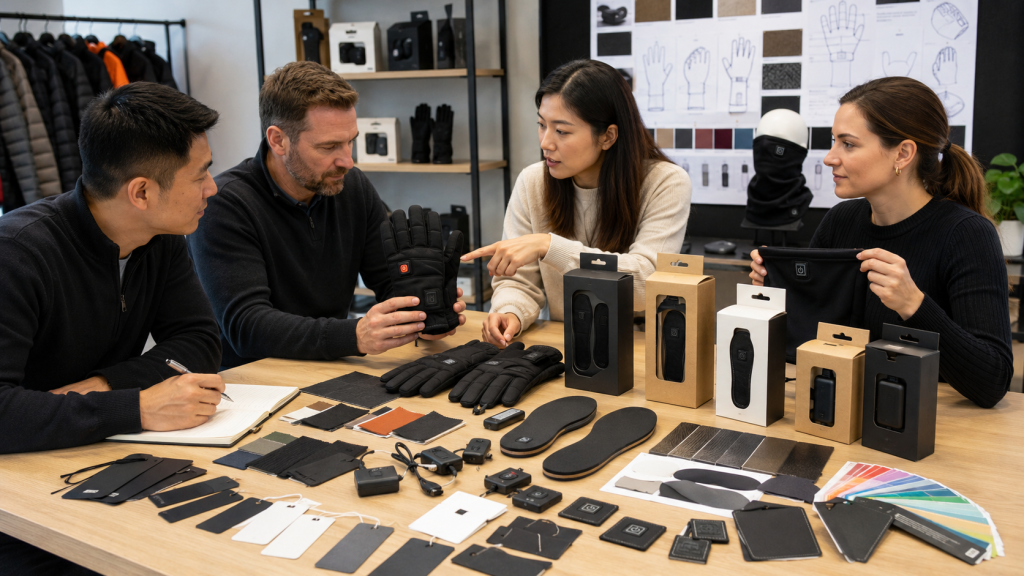
Private labeling is often associated simply with adding a logo to an existing product. However, reputable manufacturers offer a range of customisation options that allow you to differentiate your products from competitors using the same manufacturing base:
Visual Customisation
- Custom logo embroidery or heat transfer on the product and packaging
- Colour selection from the manufacturer’s available fabric options, or custom Pantone matching at higher MOQs
- Custom zipper pulls, buttons, and hardware finishes
- Branded care labels and hang tags
- Custom retail packaging design, including boxes, poly bags, and inserts
Product Specification Adjustments
- Battery capacity selection (e.g., 2,200mAh, 3,000mAh, or 5,000mAh for gloves)
- Heating zone configuration (number and placement of heating elements)
- Material upgrades (e.g., from standard polyester to Gore-Tex or leather)
- Sizing charts tailored to your target market’s body types
The level of customisation available typically correlates with order volume. At lower MOQs (100-300 units), you can expect logo branding and colour selection. At higher volumes (1,000+ units), full material specification and custom tooling become available.
MOQ and Pricing Structure
Understanding the MOQ and pricing structure is essential for planning your product launch. Here is a typical tiered structure for private label heated accessories:
- Sample order (5-10 units): Full retail price, for product evaluation and photography. Lead time: 7-14 days.
- Low MOQ (100-300 units): Moderate discount from retail, includes logo branding and standard colour options. Lead time: 25-35 days.
- Standard MOQ (500-1,000 units): Significant discount, includes custom packaging and specification adjustments. Lead time: 35-45 days.
- High volume (2,000+ units): Best pricing, full customisation including custom materials and tooling. Lead time: 45-60 days.
For first-time private label brands, the recommended approach is to start with a sample order to evaluate the product, followed by a low MOQ production run to test the market. Once you have validated demand, you can place larger orders to improve margins.
Quality Control and Certification Requirements
Heated accessories contain lithium-ion batteries and electrical heating elements, which means quality control is not optional, it is a safety requirement. When evaluating private label partners, ask about their quality control processes:
Does the manufacturer have in-house testing labs? Do they perform aging tests on heating elements to verify long-term durability? What is their defect rate and return policy? A manufacturer with CE, FCC, and RoHS certifications demonstrates compliance with international safety standards, which is essential for selling in the European Union, United States, and other regulated markets.
Request a sample of the product’s documentation, including the user manual, safety data sheet for the battery, and test reports. These documents should be branded with your logo and included with each product. Retailers and marketplaces such as Amazon increasingly require this documentation for heated products.
Building Your Brand Identity
The success of a private label heated accessories brand depends not just on the product, but on the brand identity you build around it. Invest in professional product photography that showcases the heating zones and battery features. Create educational content that helps customers understand how heated accessories work and how to care for them. Develop a clear brand story that connects your products to your target audience’s needs.
Consistency across all touchpoints, from product packaging to your website to social media, builds trust and differentiates your brand from the generic alternatives that flood online marketplaces. The manufacturer you choose should support this effort by providing high-quality product images, technical specifications, and marketing materials that you can adapt for your brand.
Ready to launch your heated accessories brand? NRheat offers private label services across gloves, socks, hats, and more, with flexible MOQs starting at 500 units. Request our product catalogue and branding guide today.