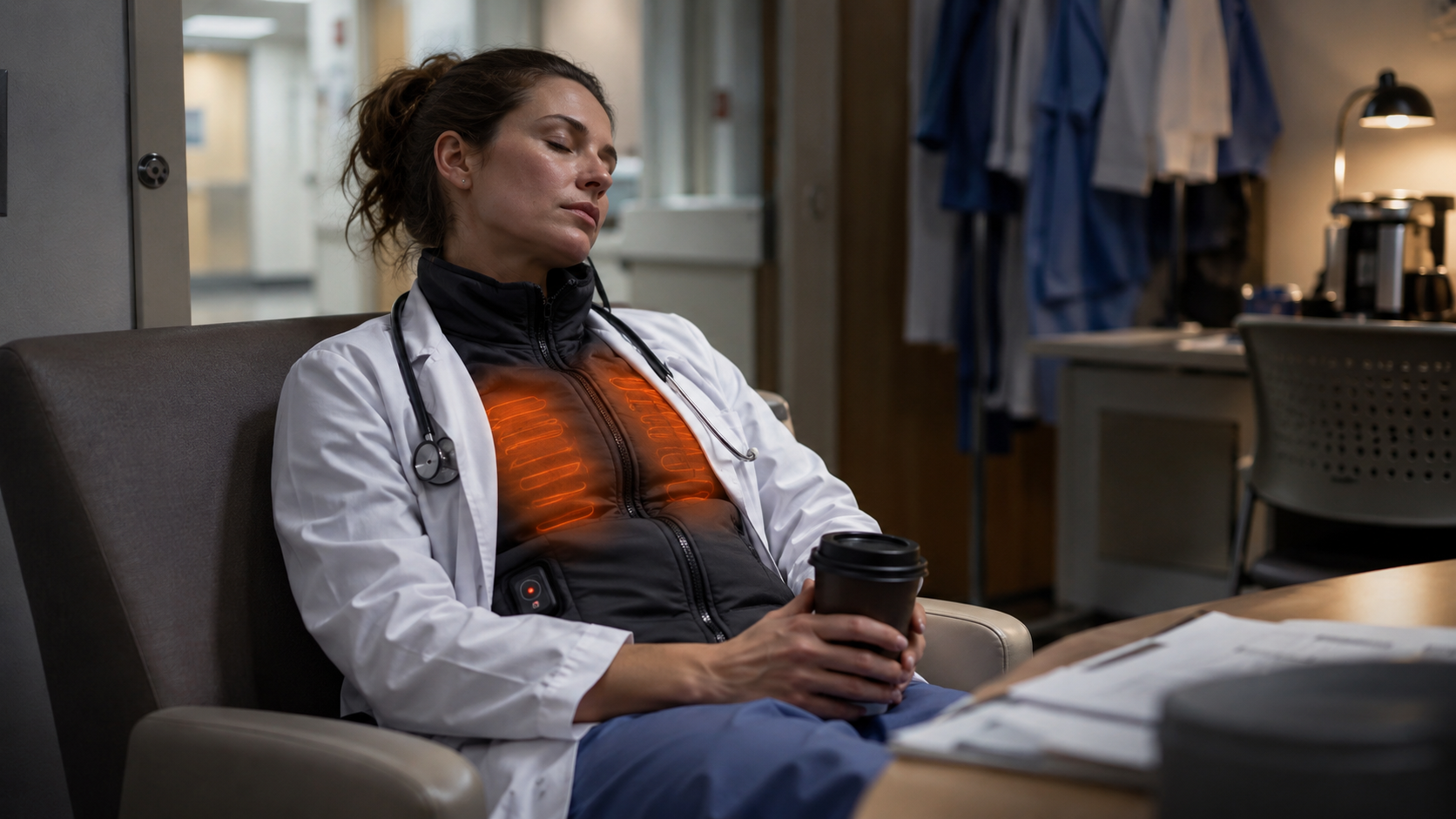
Hospitals and medical facilities are notoriously cold environments. Air conditioning systems run continuously to maintain sterile conditions, equipment generates ambient cooling, and many healthcare facilities keep temperatures low to slow bacterial growth. For nurses, doctors, and technicians working twelve-hour shifts in these conditions, the constant cold is more than a discomfort. It can lead to reduced concentration, muscle tension, and even compromised immune function over time. Heated clothing offers a practical solution that is gaining traction across the healthcare sector.
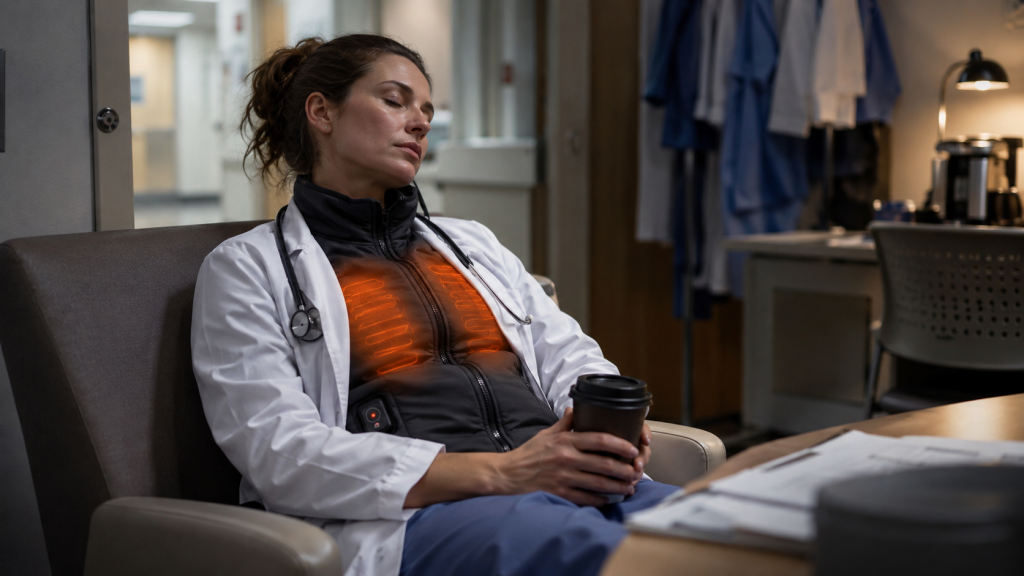
Why Healthcare Workers Need Heated Clothing
The challenge of staying warm in medical environments is unique. Unlike outdoor workers who can layer heavy coats, healthcare professionals must maintain mobility for patient care, adhere to dress codes, and avoid bulky garments that could catch on equipment or interfere with sterile procedures. Traditional layering with scrubs and light jackets often falls short when facility temperatures drop below 20 degrees Celsius.
Research has shown that cold stress affects cognitive performance, reaction time, and manual dexterity, all of which are critical for healthcare professionals. A study published in the journal Ergonomics found that workers in cold environments made 25 percent more errors on fine motor tasks than those in thermally comfortable conditions. For healthcare workers administering medication, performing procedures, or monitoring vital signs, this margin of error is unacceptable.
Heated clothing addresses this problem at its source. By delivering targeted warmth directly to the body’s core, heated vests and jackets allow healthcare professionals to maintain comfortable body temperature without adding bulk or compromising mobility.
Best Heated Clothing Options for Medical Settings
Heated Vests: The Versatile Choice
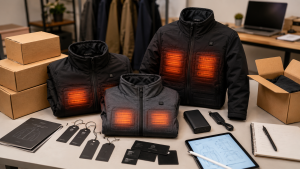
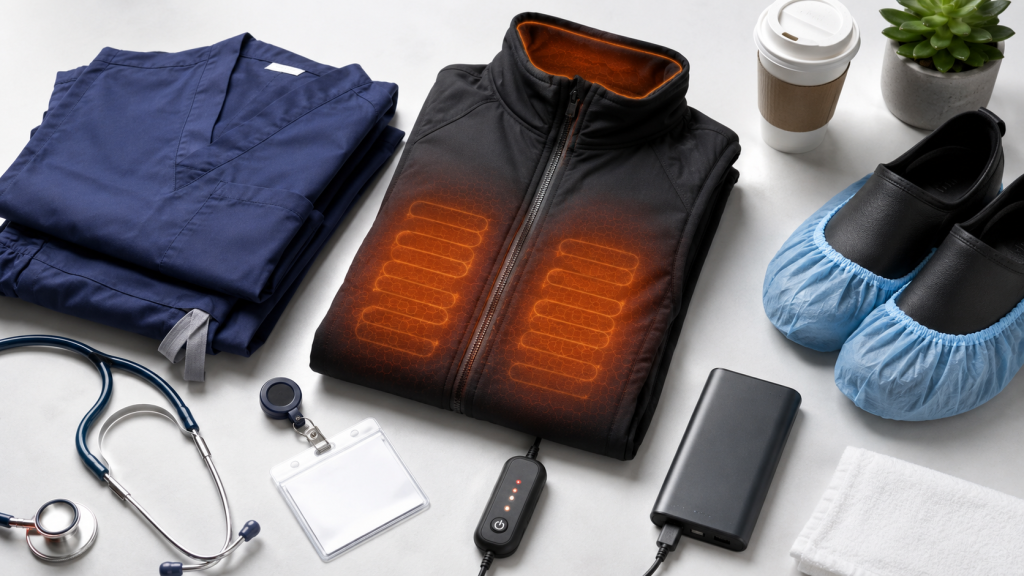
Heated vests are the most popular option for healthcare professionals because they provide core warmth while leaving the arms completely free. A heated vest can be worn under a lab coat or scrub jacket, making it virtually invisible to patients while delivering sustained warmth throughout a shift. Look for vests with three to four heating zones covering the chest, back, and neck, powered by a slim 5V or 7.4V battery that fits discreetly in a pocket.
Heated Jackets: For Outdoor Commutes and Break Areas
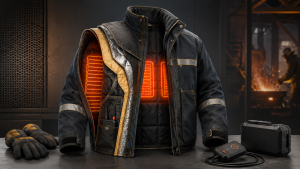
For healthcare workers who commute by foot, bicycle, or public transit, or who take breaks in outdoor areas, a heated jacket provides more comprehensive coverage. Heated jackets designed for professional use typically feature water-resistant outer shells, multiple heating zones including the arms, and removable battery packs that can be swapped during long shifts.
Heated Socks and Insoles: For Stationary Positions
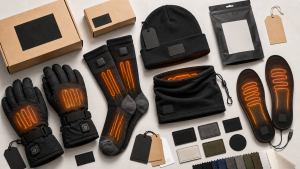
Healthcare professionals who spend extended periods standing at monitoring stations, surgical theatres, or reception desks often experience cold feet as the primary discomfort. Heated socks and insoles provide targeted foot warmth without the need for a full heated garment. These accessories are particularly valuable for operating room staff who must stand for hours during procedures.
Customisation Options for Healthcare Teams
One of the advantages of sourcing heated clothing through a B2B manufacturer is the ability to customise garments for specific healthcare teams. Customisation options include:
- Embroidery: Names, credentials, and specialisations can be embroidered directly on the garment, combining personalisation with professional appearance
- Colour matching: Garments can be produced in colours that match existing uniform schemes or department codes
- Logo placement: Hospital or clinic logos can be added via embroidery or heat transfer
- Pocket configuration: Custom pocket placement for medical instruments, badges, or communication devices
- Heating zone adjustment: Zones can be repositioned to accommodate different body types or work positions
For hospitals and clinics ordering heated clothing for entire departments, these customisation options help build team identity while ensuring each garment meets the specific needs of the wearer’s role.
Battery Life and Shift Duration
Battery life is a critical consideration for healthcare applications. A standard twelve-hour nursing shift requires a heating system that can deliver consistent warmth for at least eight hours of active use, accounting for break periods when the heating can be switched off.
Most 5V systems provide three to six hours of continuous heat on the medium setting. For full-shift coverage, healthcare professionals should look for 7.4V systems with batteries rated at 5,000mAh or higher, which can deliver six to eight hours on medium settings. Some manufacturers offer dual-battery configurations or quick-swap battery systems that allow workers to carry a spare battery and extend heating time beyond twelve hours.
Charging infrastructure is another consideration. Hospitals and clinics should provide charging stations in break rooms or lockers where workers can charge batteries between shifts. Some manufacturers offer multi-bay chargers that can simultaneously charge six or more battery packs.
Safety Considerations in Medical Environments
Heated clothing used in healthcare settings must meet specific safety requirements. The heating elements should be fully enclosed and shielded to prevent electromagnetic interference with medical equipment. Battery packs should be certified to relevant safety standards, including UN38.3 for lithium-ion transportation safety.
For professionals working in MRI environments, specialised non-magnetic heated clothing may be required. Standard heated garments contain metal heating elements and battery components that are strictly prohibited in MRI suites. Manufacturers with experience in the healthcare sector can advise on appropriate products for different medical environments.
Hygiene is another important factor. Heated clothing used in patient-facing roles should be washable, with heating elements that withstand repeated laundering. Look for garments with removable battery packs and wiring systems rated for at least 50 wash cycles. Manufacturers should provide care instructions that are compatible with hospital laundry protocols.
Cost-Benefit Analysis for Healthcare Facilities
While heated clothing represents an upfront investment, the long-term benefits for healthcare facilities include reduced sick days related to cold-related illness, improved staff retention, and enhanced productivity. When compared to the cost of raising facility-wide temperatures, which can compromise sterile conditions and increase energy bills significantly, providing heated vests to staff is a cost-effective alternative.
For procurement teams, the key is to start with a pilot programme. Order a small batch of heated vests for one department, gather feedback over a four-week period, and use the results to build a business case for broader deployment.
Equip your healthcare team with customised heated clothing. NRheat offers professional-grade heated vests and jackets with embroidery options, washable heating systems, and flexible MOQs for hospital procurement. Contact us for a sample order.