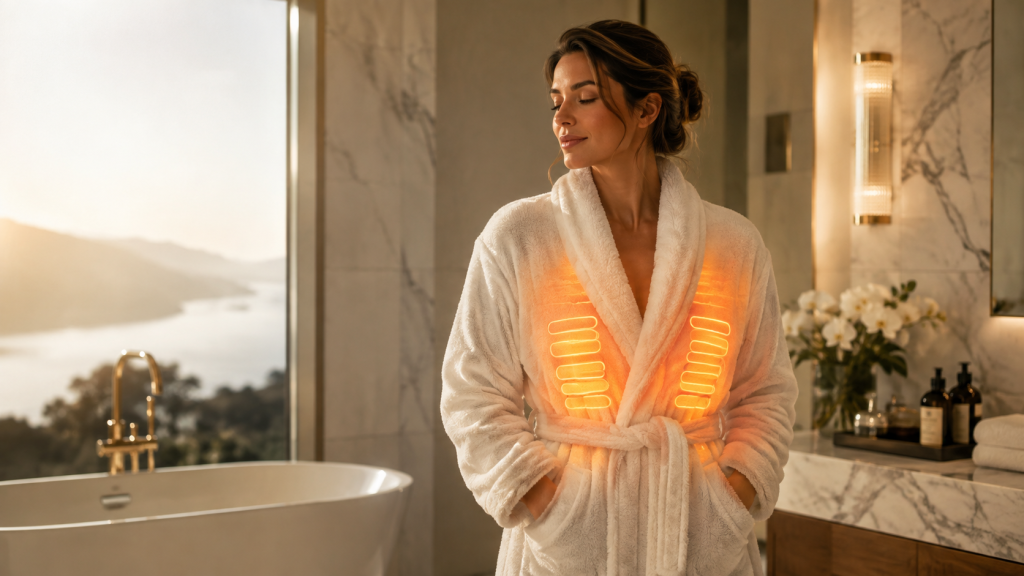
The heated clothing industry has historically focused on functional outdoor and industrial applications: jackets for skiers, gloves for hunters, vests for construction workers. But as heating technology becomes lighter, safer, and more affordable, a new category is emerging that targets a completely different consumer: the luxury comfort market. Heated bathrobes represent the intersection of wellness, self-care, and wearable technology, and they are positioned to become one of the most talked-about product categories in heated apparel. This article explores the technology, market potential, and manufacturing considerations for brands looking to enter this space.
What Is a Heated Bathrobe?
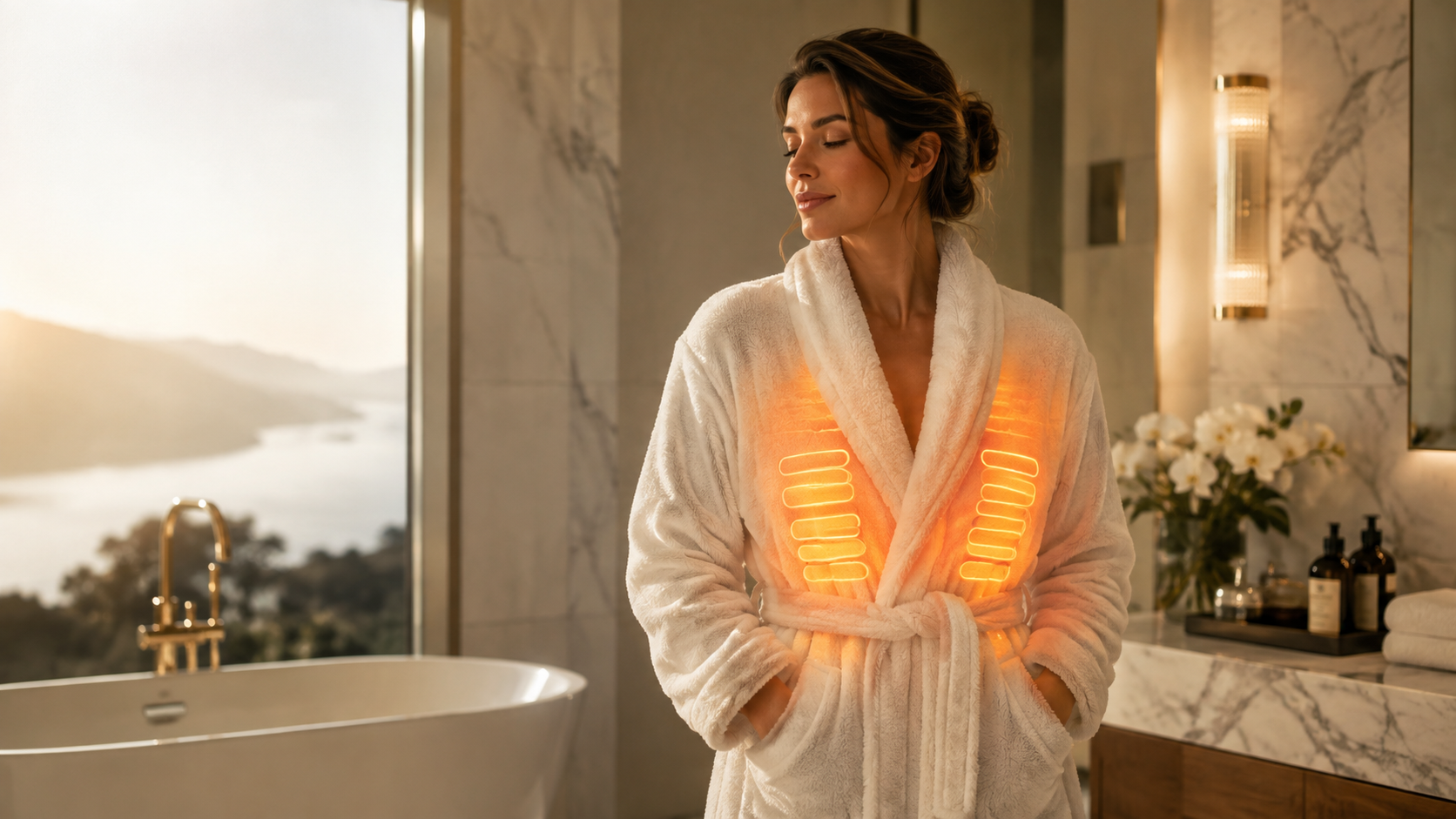
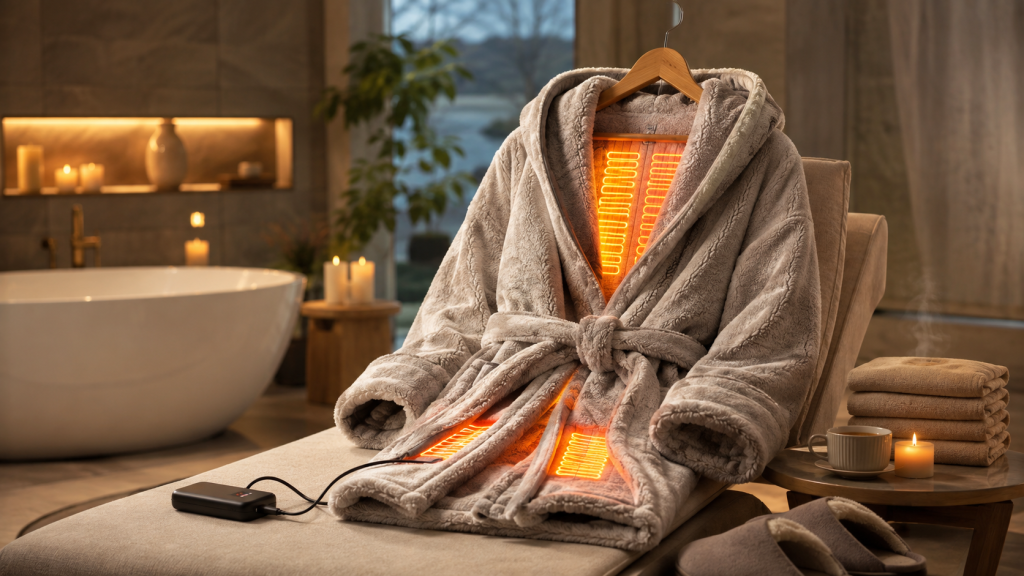
A heated bathrobe is a bathrobe integrated with battery-powered heating elements that provide adjustable warmth to the wearer. Unlike traditional terry cloth robes that rely solely on fabric insulation, heated bathrobes actively generate warmth through carbon fibre or graphene heating elements strategically placed in the back, chest, and sometimes the pockets. A rechargeable lithium-ion battery, typically housed in a discreet pocket, powers the system for two to six hours depending on the heat setting.
The concept is simple but the execution requires careful engineering. The heating elements must be flexible enough to drape naturally with the robe’s fabric, waterproof enough to survive post-shower use, and comfortable against bare skin. The battery and controller must be unobtrusive, adding minimal weight and bulk to a garment designed for relaxation.
The Market Case for Heated Bathrobes
The Wellness and Self-Care Trend
The global wellness market was valued at over $1.8 trillion in 2024 and continues to grow at a compound annual rate of 5 to 10 percent. Consumers are increasingly investing in products that enhance comfort, relaxation, and recovery. Heated bathrobes fit naturally into this trend, offering a tangible upgrade to a product that people already associate with self-care rituals.
Spas, hotels, and wellness retreats represent a significant B2B opportunity. Luxury establishments constantly seek ways to differentiate their guest experience, and a heated bathrobe in every room creates a memorable touchpoint that guests are likely to photograph and share on social media.
The Cold Climate Consumer
In regions with cold winters, stepping out of a warm shower into a cold bathroom is a daily discomfort that consumers are willing to pay to solve. Heated bathrobes address this pain point directly, providing instant warmth that makes the post-shower transition comfortable regardless of room temperature. This is particularly relevant for older consumers and those with circulation issues, who are more sensitive to temperature changes.
The E-commerce Gift Market
Heated bathrobes have strong gift appeal. They are a premium, experiential product that feels indulgent but serves a practical purpose. The gifting angle is particularly strong for holidays such as Christmas, Valentine’s Day, and Mother’s Day. E-commerce brands that position heated bathrobes as the ultimate comfort gift can capture significant seasonal demand.
Technology Behind Heated Bathrobes
Heating Elements
Carbon fibre and graphene are the two primary heating element technologies used in heated bathrobes. Carbon fibre is well-established, affordable, and provides reliable, even heat distribution. Graphene is newer and more expensive but offers superior flexibility, faster heat-up times, and a thinner profile that is less detectable through the fabric. For luxury positioning, graphene elements provide a premium feel that justifies a higher price point.
The heating elements in a bathrobe are typically placed in the upper back, lower back, and chest areas. Some designs include heated pockets for hand warming. The number of zones typically ranges from three to six, with three being the minimum for adequate coverage and six providing a premium full-torso experience.
Battery and Control System
Heated bathrobes use 5V or 7.4V battery systems. A 5V system with a 5,000mAh battery provides approximately three to four hours of heat on medium setting, which is sufficient for most post-shower use. A 7.4V system with a 5,000mAh battery extends this to five to six hours and provides higher maximum temperatures, making it suitable for colder environments or extended lounging.
The controller should be simple and intuitive, ideally with a single button that cycles through heat settings. A LED indicator showing the current heat level is essential. The battery should be removable for washing, with a waterproof connector that clicks securely into place.
Fabric Considerations
The outer fabric of a heated bathrobe must balance comfort, absorbency, and washability. Premium options include:
- Egyptian cotton terry: Classic luxury feel, excellent absorbency, durable
- Bamboo fibre: Silky texture, naturally antimicrobial, eco-friendly positioning
- Microfleece: Lightweight, fast-drying, warm even without heating
- Waffle knit: Breathable, lightweight, spa-like aesthetic
The interior layer housing the heating elements should be a soft, breathable fabric that protects the elements while remaining comfortable against bare skin. The wiring must be routed through channels that prevent it from shifting during wear or washing.
Manufacturing Considerations
Producing a heated bathrobe requires expertise in both apparel manufacturing and heating system integration. Key manufacturing considerations include:
The heating elements must be quilted or channelled into the fabric in a way that maintains flexibility and prevents bunching. The wiring harness must be designed to accommodate the robe’s open-front construction, with wires routed along the back panel and shoulders rather than across the front opening. The battery pocket must be positioned for easy access while sitting or walking, typically on the left hip or inside the robe near the waist tie.
Washability is a critical specification. The robe must be machine washable with the battery removed, and the heating elements must withstand at least 50 wash cycles without degradation. Manufacturers should provide wash testing data and clear care instructions.
Getting Started with Heated Bathrobe Production
For brands interested in entering the heated bathrobe market, the recommended approach is to start with a market validation sample. Work with a manufacturer that has experience in both heated apparel and terry cloth construction to produce 5 to 10 prototype units. Use these prototypes for customer testing, photography, and marketing material creation.
Once you have validated demand, a pilot production run of 100 to 200 units allows you to test the market through e-commerce or spa partnerships. The heated bathrobe is a category where quality and experience matter more than price, so invest in premium materials and refined design from the outset. A well-executed heated bathrobe can command a retail price of $150 to $300, with healthy margins even at modest volumes.
Exploring heated bathrobe production? NRheat offers ODM design services for new product categories, with expertise in both heating system integration and luxury apparel construction. Contact us to discuss your concept and request prototype samples.