
Heat stress is one of the most underestimated workplace hazards in industrial environments. From construction sites in the Caribbean to mining operations in the Australian outback, workers exposed to high temperatures face reduced productivity, increased accident risk, and serious health consequences including heat exhaustion and heat stroke. Cooling vests have emerged as a practical solution, but finding the right OEM partner to manufacture them requires careful evaluation. This guide walks through everything B2B buyers need to consider.
Understanding Cooling Technologies in Industrial Apparel
Before evaluating suppliers, it is essential to understand the three primary cooling technologies used in industrial cooling apparel, as each has distinct advantages and limitations.
Phase Change Material (PCM) Cooling
PCM cooling vests use packs of specialised wax or gel that absorb heat as they transition from solid to liquid state. PCM packs can be engineered to maintain specific temperatures, typically 15 to 18 degrees Celsius, for two to three hours. The advantage of PCM is that it provides consistent cooling without requiring power or water. The limitation is that the packs must be recharged in a freezer or refrigerator between uses, which may not be practical in remote work sites.
Evaporative Cooling
Evaporative cooling vests use specially treated fabrics that absorb water and release it slowly through evaporation, creating a cooling effect. These vests are lightweight, inexpensive, and require only water to activate. However, their effectiveness depends on ambient humidity. In high-humidity environments such as tropical climates, evaporative cooling provides minimal benefit because the air is already saturated with moisture.
Active (Liquid Circulation) Cooling
Active cooling vests use a small pump to circulate chilled liquid through a network of tubes embedded in the garment. This technology provides the most powerful and controllable cooling, but it requires a battery pack and a reservoir, adding weight and complexity. Active cooling is typically reserved for the most extreme heat environments where passive solutions are insufficient.
Industrial Applications for Cooling Vests
Cooling vests are used across a wide range of industries where heat stress is a concern:
- Construction and road work in summer temperatures
- Mining and smelting operations near furnaces and kilns
- Manufacturing facilities with limited ventilation or process heat
- Agricultural work in tropical and subtropical climates
- Military and law enforcement personnel wearing heavy protective gear
- Oil and gas refinery workers near heat-generating equipment
For distribution partners, understanding these use cases is critical for marketing and product positioning. A cooling vest designed for construction workers in the Caribbean may need different specifications than one designed for foundry workers in Eastern Europe.
Key Considerations When Choosing an OEM Partner
Manufacturing Capabilities
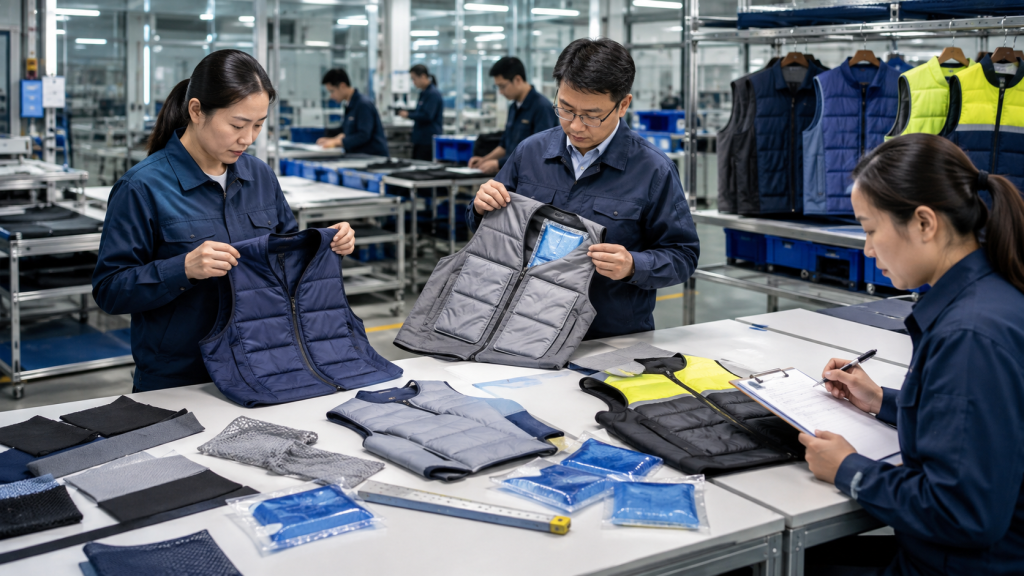
Not all heated clothing manufacturers can produce cooling apparel. The technologies, materials, and production processes are distinct. When evaluating OEM partners, ask specifically about their experience with cooling products. Do they have dedicated production lines for cooling garments? Can they source PCM packs, evaporative fabrics, or active cooling components? A manufacturer that only produces heated clothing may lack the expertise to deliver quality cooling products.
Customisation and ODM Services
If you are entering the cooling vest market for the first time, you may need a partner that offers ODM (original design manufacturing) services rather than pure OEM. ODM means the manufacturer can design the product from scratch based on your specifications, including material selection, cooling technology integration, and garment construction. This is particularly valuable for distributors who understand their local market needs but lack in-house product design expertise.
Minimum Order Quantities (MOQ)
MOQ is a critical factor for new distributors testing a market. Some manufacturers require MOQs of 1,000 units or more, which represents a significant investment for an unproven market. Look for partners that offer flexible MOQs, allowing you to start with a smaller batch of 100 to 500 units for market validation before committing to larger orders. Sample orders of 5 to 10 units should be available for product evaluation.
Certifications and Compliance
Industrial cooling apparel may need to meet specific safety standards depending on the target market. In the European Union, CE marking is required. In the United States, products may need to comply with ANSI or OSHA standards for workplace safety. Verify that your OEM partner can provide the necessary documentation and has experience with the certification process for your target markets.
The OEM Partnership Process: Step by Step
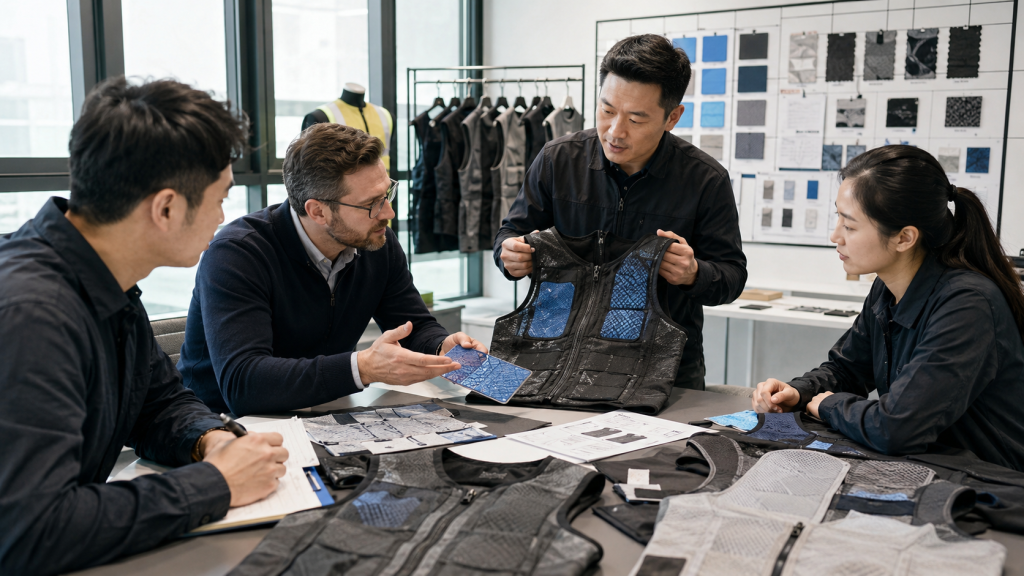
A typical OEM partnership for cooling vests follows these stages:
- Step 1: Initial consultation to define product specifications, target market, and quantity requirements
- Step 2: Sample production, typically 3 to 5 units, for evaluation and field testing
- Step 3: Specification refinement based on sample feedback
- Step 4: Pilot production run of 50 to 100 units for market testing
- Step 5: Full production order with agreed MOQ and pricing structure
- Step 6: Ongoing quality monitoring and product iteration based on market feedback
The entire process from initial consultation to full production typically takes three to six months, depending on the complexity of the product and the extent of customisation required. Distributors should plan their market entry timeline accordingly.
Distribution Models: Exclusive vs Non-Exclusive
When negotiating an OEM partnership, consider whether you want exclusive distribution rights for a specific territory. Exclusive rights give you a competitive advantage in your local market but typically come with higher MOQ commitments. Non-exclusive arrangements offer more flexibility but mean the manufacturer can supply other distributors in the same region.
For distributors in emerging markets such as the Caribbean, Southeast Asia, or Latin America, exclusive distribution rights can be particularly valuable because the cooling vest market is still developing and first-mover advantage is significant. Government procurement contracts for occupational safety equipment often favour suppliers with exclusive regional distribution agreements.
Building a Long-Term Partnership
The best OEM relationships are long-term partnerships, not transactional supplier arrangements. Look for a manufacturer that invests in understanding your market, offers product development support, and is willing to iterate on designs based on end-user feedback. A partner that views your success as their success will be more valuable than one that simply produces to specification and ships.
Ready to explore a cooling vest OEM partnership? NRheat offers both cooling and heated apparel manufacturing with flexible MOQs, ODM design services, and CE/FCC certified production. Contact us to discuss your market and product requirements.