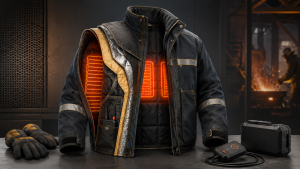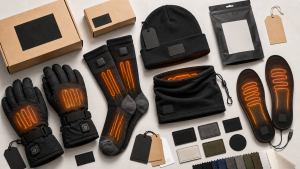

For millions of outdoor workers—construction crews, utility workers, delivery drivers, and agricultural workers—winter is not a season that stops work. These professionals must perform their jobs safely and productively in freezing temperatures, often for full 8-12 hour shifts.
Heated vests have become essential cold-weather gear for outdoor professionals. This guide covers workplace safety considerations, OSHA guidelines, and how to choose heated vests that improve both safety and productivity.

The Impact of Cold on Work Performance
Cold temperatures affect workers in several ways. Reduced dexterity from cold hands increases accident risk. Cold muscles fatigue faster and are more prone to strains and sprains. Hypothermia and frostbite are serious risks in extreme conditions.
Studies show that comfortable workers are more productive, make fewer errors, and have better safety records. A heated vest that maintains core body temperature helps mitigate these cold-related risks.
OSHA Guidelines and Workplace Safety
OSHA requires employers to provide a safe workplace, which includes protecting workers from extreme cold. While OSHA does not have specific regulations for heated clothing, general duty clauses require addressing recognized hazards, including cold stress.
Heated vests can be part of a comprehensive cold stress prevention program that includes regular warm breaks, appropriate clothing, and worker training. However, heated vests must not create new hazards—they should not interfere with movement, get caught in machinery, or pose electrical risks.
Choosing Workplace-Safe Heated Vests
ANSI Safety Compliance
For construction and road work, ANSI/ISEA 107 compliant high-visibility clothing may be required. Some heated vest manufacturers offer ANSI-compliant models with reflective strips and high-visibility colors. These vests keep you warm while meeting safety regulations.
nrheat.com offers heated vests in high-visibility yellow and orange options that meet ANSI Class 2 or Class 3 standards. These are ideal for road construction, utility work, and any job near vehicular traffic.
Battery Safety for Industrial Environments
Workplace heated vests must have well-protected batteries. Look for battery packs with impact-resistant casings and secure placement that will not snag on equipment. Some jobsite vests use tool-brand batteries (DeWalt, Milwaukee, Makita) that workers may already have.
Durability for Daily Use
A heated vest for work must withstand daily abuse—dirt, abrasion, occasional sparks, and frequent washing. Look for vests with ripstop nylon or canvas exteriors, reinforced stitching, and covered battery compartments.
Integrating Heated Vests into Work Uniforms
Many companies now include heated vests in their standard cold-weather uniform allowances. When implementing heated vests as standard gear, consider these best practices: provide training on proper use and care, offer multiple sizes to ensure proper fit, establish charging stations at the workplace, and set guidelines for when heated gear is required.
nrheat.com works with businesses to provide bulk heated vest purchases with customization options, including company logos and specific color requirements.
Battery Management for Long Shifts
An 8-12 hour work shift requires careful battery planning. Vests with 10-hour battery life on medium settings are ideal. For longer shifts, provide spare batteries and designated charging areas.
Some workplaces use 12V heated vests that can connect to vehicle power outlets. This eliminates battery life concerns for drivers and equipment operators.
Cold Stress Prevention Program
Heated vests work best as part of a comprehensive cold stress prevention program. Key elements include: engineering controls (heated break areas, windbreaks), work practice controls (rotating indoor/outdoor tasks, scheduled warm breaks), and personal protective equipment (heated vests, insulated boots, thermal gloves).
Train workers to recognize cold stress symptoms: shivering, slurred speech, clumsiness, and confusion. A heated vest reduces risk but does not eliminate the need for proper cold weather protocols.
Cost-Benefit Analysis for Employers
Employers often ask whether heated vests are worth the investment. Consider these factors: reduced cold-related absences, fewer cold-stress incidents and associated costs, improved productivity and work quality, and increased employee morale and retention.
Many employers find that providing heated vests pays for itself through reduced cold-related incidents and improved winter productivity.
Conclusion
Heated vests are valuable tools for maintaining outdoor worker safety and productivity in cold weather. Choose ANSI-compliant, durable vests with adequate battery life. Integrate heated vests into a comprehensive cold stress prevention program for maximum benefit. Contact nrheat.com for bulk pricing and workplace-specific heated vest solutions.
Ready to experience premium warmth? Visit nrheat.com to explore our full collection of heated vests and heated gloves, backed by our satisfaction guarantee and responsive customer support.